
Oud Agarwood
Kinam vs Oud vs Agarwood: What Is the Difference? (Expert Guide)
Apr
🌿 Quick Takeaways: Kinam vs Oud vs Agarwood Explained
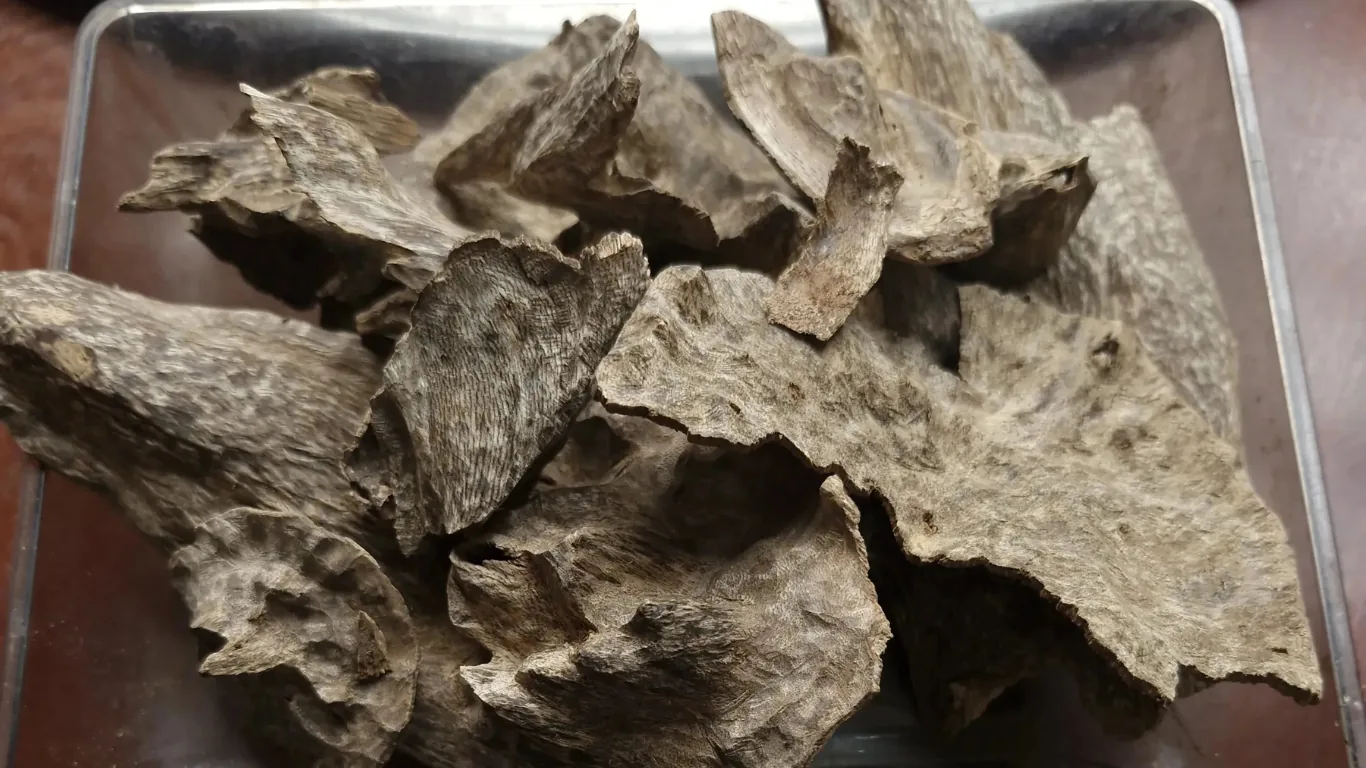
- Agarwood (Gaharu / Aloeswood): The broad term for the resinous heartwood produced by infected Aquilaria trees.
- Oud (Dehn Al Oud): Primarily refers to the precious distilled essential oil or pure burning wood chips in Arabic fragrance tradition.
- Kinam (Kyara / Qi Nan 奇楠): The absolute rarest mutation of agarwood. Its cellular resin is soft, gummy, and exhibits five distinct olfactory flavor transformations upon gentle warming.
- Taste & Texture: Ordinary high-grade agarwood is hard and woody; genuine Kinam can be indented with a fingernail and causes a subtle tongue-numbing sensation when tasted.
In the illustrious world of aromatic treasures, few substances command as much reverence and mystique as agarwood. For millennia, this precious resinous wood, born from the heart of specific Aquilaria trees, has been sought after for its intoxicating fragrance, its profound spiritual properties, and its unparalleled rarity. It is the very soul of luxury, meditation, and ancient tradition. Yet, within this revered category, there exists an even more exalted stratum, a mythical grade known as Kinam, or Ky Nam in Vietnamese. While all Kinam is agarwood, not all agarwood is Kinam. This distinction is not merely academic; it represents a chasm in rarity, aroma, and intrinsic value, a journey from the exquisite to the truly sublime.
As experts from OudWood Vietnam, rooted in the rich soil and heritage of Khanh Hoa province, we often guide enthusiasts through the intricate nuances of this sacred wood. Our mission is to illuminate the path for collectors, spiritual practitioners, and connoisseurs, ensuring they understand the profound differences and appreciate the unparalleled purity of truly authentic Vietnamese agarwood. Join us as we delve deep into the heart of the Aquilaria forest, unraveling the secrets that differentiate the precious agarwood from the legendary Kinam.
The Genesis of Agarwood: Nature’s Miraculous Transformation
Agarwood, known globally as Oud, Aloeswood, or Gaharu, is not merely a type of wood; it is a profound natural phenomenon. It originates from the heartwood of various species within the Aquilaria genus, primarily found across Southeast Asia. In Vietnam, particularly in our ancestral lands of Khanh Hoa and Nha Trang, the Aquilaria crassna species is celebrated for producing some of the world’s finest agarwood. This transformation begins when the Aquilaria tree suffers an injury – be it from lightning, an insect attack, a fallen branch, or even a deliberate human incision. This trauma makes the tree vulnerable to infection by a specific type of mold, typically from the Phialophora parasitica family.
In a miraculous defense mechanism, the tree’s immune system responds to this fungal invasion by producing a dark, fragrant oleoresin. This resin saturates the heartwood, changing its color, density, and most importantly, its aromatic profile. The more severe the infection and the longer the resin has to accumulate and mature, the higher the quality and value of the agarwood. This process is painstakingly slow, often requiring decades, sometimes even centuries, for significant resinification to occur. This rarity, combined with its unparalleled fragrance, has made agarwood one of the most coveted natural resources on earth. At OudWood Vietnam, we honor this natural process by carefully selecting only sustainable and ethically sourced Aquilaria crassna wood, ensuring its purity and potency for our discerning clientele.
Demystifying Agarwood Grades: From Chips to Sinking Treasures
The world of agarwood is further categorized by an intricate grading system, primarily based on resin content, density, age, and aromatic complexity. These grades directly influence the wood’s value, burn time, and the depth of its fragrance. Generally, agarwood is classified into several tiers, with “sinking grade” representing the pinnacle of standard agarwood quality, just below the mythical Kinam.
- Sinking Grade (Super A Grade): This is the highest quality of non-Kinam agarwood. Richly saturated with resin, it is dense enough to sink in water. Its aroma is profound, long-lasting, and multi-layered, often featuring notes of sweetness, woodiness, and subtle spice. Our OudWood Vietnam sinking grade chips and beads are exemplary, offering an immersive olfactory experience for meditation, luxury gifting, and serious collectors.
- Grade A (15-25% Resin): High-quality agarwood with substantial resin content. It typically floats initially but sinks after some time due to good density. The fragrance is rich, warm, and highly desirable for incense, essential oils, and premium chips.
- Grade B: Contains a moderate amount of resin, offering a pleasant and distinctive agarwood aroma. It’s often used in more accessible incense products, backflow cones, and for daily aromatherapy.
- Grade C & D: Lower resin content, lighter in weight and color. These grades still carry the characteristic agarwood scent but are less intense and complex. They are often used for general incense, larger-scale distillation, or for blending.
The grade of agarwood dictates its ideal use. Higher grades are typically reserved for direct burning as chips (known as “fumigation”), for crafting precious beads, or for the purest essential oils. Lower grades find their way into a broader range of products like incense sticks, cones, and coils, where they still offer an authentic and purifying fragrance. OudWood Vietnam prides itself on offering a complete spectrum of these grades, each meticulously processed in Khanh Hoa using only 100% pure natural agarwood and natural litsea bark binder, ensuring zero synthetic chemicals, zero DPG, zero charcoal boosters, and zero artificial dyes. This commitment guarantees a clean, toxin-free burn, vital for health, especially during meditation and yoga practices.
Kinam (Ky Nam): The Zenith of Agarwood — A Category Apart
Above all grades of agarwood, shimmering with an almost ethereal glow, lies Kinam, or Ky Nam as it is known in Vietnam. This legendary substance is not just a high grade of agarwood; it is an entirely distinct phenomenon, often considered the rarest and most valuable aromatic material on earth. Its formation is even more enigmatic and exceptional than standard agarwood, requiring an even more profound and prolonged interaction between the Aquilaria tree and its environment, coupled with a specific type of fungal infection and a unique genetic predisposition within the tree itself.
True Kinam is extraordinarily rare, so much so that even experienced agarwood hunters may go their entire lives without finding a significant piece. It is primarily associated with ancient Aquilaria crassna trees found in the most pristine and undisturbed jungles of Vietnam, particularly in regions like Khanh Hoa, where the unique terroir and ecosystem contribute to its unparalleled characteristics. While standard agarwood is dense and hard due to resin saturation, Kinam possesses a unique, almost waxy or crumbly texture, despite being even more resinous. When touched, it often leaves an oily residue on the fingers, a testament to its supreme resin content, which can reach up to 80% or even higher.
The aroma of Kinam is where its true magic lies. Unlike the rich, woody notes of high-grade agarwood, Kinam offers a complex, multi-layered fragrance that evolves dynamically through different temperature phases. It is often described as having “five tastes” (sweet, spicy, bitter, sour, salty) and “five colors” in its aroma, moving through cool, refreshing minty notes, potent medicinal and spicy accords, deep honeyed sweetness, and profound floral or fruity undertones. This extraordinary aromatic spectrum makes Kinam not just a fragrance, but an experience, deeply revered in spiritual practices, traditional medicine, and as the ultimate collector’s item. Its scarcity and unparalleled properties place it in a league of its own, making it the “King of Incense” and a true treasure of Vietnam.
The Distinctive Markers: Kinam vs. Standard Agarwood
To truly appreciate the wonder of Kinam, one must understand the subtle yet profound differences that set it apart from even the highest grades of conventional agarwood. These distinctions span from their formation to their physical properties, and most notably, their aromatic profiles.
- Formation & Rarity: Standard agarwood develops over decades through fungal infection following injury. Kinam, however, is believed to require a much more specific, intense, and prolonged set of environmental stressors and fungal interactions, perhaps even a genetic mutation in the Aquilaria tree, making its occurrence exponentially rarer. While good agarwood is rare, true Kinam is exceedingly so.
- Resin Content & Texture: While high-grade agarwood boasts significant resin (15-25% for Grade A, higher for sinking grades), Kinam can be saturated to an astonishing degree, sometimes up to 80% or more. This high resin content gives Kinam a distinct texture; it often feels softer, almost oily or waxy to the touch, and can sometimes be slightly pliable or crumbly, unlike the harder, denser feel of most agarwood.
- Density & Visuals: Both high-grade agarwood and Kinam will sink in water. However, Kinam often exhibits unique visual characteristics. Its resin formations can appear more marbled, striated, or even spongy, with a distinctive oily sheen even when dry. The color can vary, but true Kinam often displays deep, rich hues that hint at its profound resin saturation.
- Aroma Profile: This is the most defining characteristic. High-grade agarwood offers a rich, complex, woody, sweet, and often spicy aroma that evolves beautifully when heated. Kinam, however, presents a kaleidoscopic scent journey. It often starts with a distinct cooling, mentholic, or camphoraceous note, followed by layers of potent spice, deep sweetness (like honey or fruit), subtle floral hints, and a profound, lingering medicinal quality. Its fragrance is described as having multiple “notes” that unfold and change dynamically, often referred to as the “Kinam five tastes” (sweet, bitter, pungent, sour, salty) or “five colors” due to its multi-faceted evolution. It’s an experience that transcends mere scent, touching upon all sensory perceptions.
- Burn Characteristics: When heated, high-grade agarwood releases a luxurious, steady plume of fragrant smoke. Kinam, due to its texture and resin content, can sometimes melt slightly or bubble on a low-temperature burner. Its smoke profile is incredibly intricate, releasing wave after wave of evolving aromas that seem to linger in the air for an extraordinary duration.
Here’s a comparative table summarizing these key differences:
| Feature | Standard Agarwood (High Grade) | Kinam (Ky Nam) |
|---|---|---|
| Formation | Result of fungal infection in Aquilaria tree heartwood (decades) | Ultra-rare, specific, prolonged, intense fungal/environmental interaction (centuries) |
| Rarity | Rare and valuable | Exceedingly rare, legendary, astronomical value |
| Resin Content | 15-50% saturation (for sinking grades) | 50-80%+ saturation, sometimes appears “liquid” or waxy |
| Texture | Dense, hard, woody | Softer, oily, waxy, sometimes pliable/crumbly, leaves oily residue |
| Density | Often sinks in water (high grade) | Always sinks, often “super sinking” with unique texture |
| Visuals | Dark, resinous streaks, woody appearance | Unique marbled, striated, spongy patterns; distinct oily sheen |
| Aroma Profile | Rich, woody, sweet, spicy; complex but generally consistent | Kaleidoscopic, multi-layered; cooling, sweet, spicy, bitter, sour, salty; evolving notes (the “five tastes”) |
| Burn Characteristics | Steady, fragrant smoke; rich aroma | Bubbles/melts on low heat; dynamic aroma evolution; extremely long-lasting |
| Primary Use | Meditation, luxury incense, essential oil, beads, collection | Spiritual mastery, ultimate collection, traditional medicine, ultra-luxury gifting |
| Geographic Focus | Various Southeast Asian regions | Primarily Vietnam (especially Khanh Hoa/Nha Trang) for true Ky Nam |
The Allure of Vietnamese Kinam and Agarwood: A Legacy of Excellence
Vietnam holds a revered place in the global agarwood market, particularly for its Aquilaria crassna species, which is renowned for producing some of the world’s most exquisite agarwood and, critically, the legendary Kinam. Our home, Khanh Hoa province, with its unique microclimates and ancient forests surrounding Nha Trang, is considered a fabled heartland for these precious trees. The specific environmental conditions here—the soil composition, the rainfall patterns, the ancient fungal strains—are believed to contribute to the distinct and superior qualities of Vietnamese agarwood.
For centuries, the art of agarwood hunting, harvesting, and processing has been deeply ingrained in Vietnamese culture. This isn’t merely a commercial endeavor; it’s a revered tradition passed down through generations of artisans and forest dwellers who possess an intimate knowledge of the trees and the elusive resin. These traditional methods, combined with an inherent respect for nature, ensure that the agarwood from Vietnam is not only potent but also carries a spiritual resonance unmatched by many other origins.
When comparing Vietnamese agarwood to that from other regions like Malaysia, Indonesia, or Cambodia, connoisseurs often highlight the specific aromatic profile of Aquilaria crassna. Vietnamese agarwood is frequently characterized by its clean, sweet, and often subtly spicy notes, with a remarkable clarity and purity that avoids the overly smoky or bitter undertones sometimes found elsewhere. Vietnamese Kinam, in particular, stands out for its legendary “cooling” effect and its complex, ever-shifting aromatic layers, a hallmark rarely replicated.
At OudWood Vietnam, we are custodians of this legacy. We source our agarwood directly from the heart of Khanh Hoa, working closely with ethical harvesters who respect both the trees and the environment. This direct connection ensures that every product—from our incense sticks and essential oils to our raw chips and bracelets—embodies the authentic spirit and superior quality for which Vietnamese agarwood is globally celebrated. Our commitment to 100% pure, natural agarwood, free from any artificial enhancements, is a tribute to this rich heritage and a promise of unparalleled aromatic purity.
Navigating the Market: Ensuring Authenticity with OudWood Vietnam
The allure and high value of agarwood and Kinam have unfortunately attracted unscrupulous practices, leading to a market often flooded with fakes, adulterated products, and synthetics. From wood injected with resin, to oils diluted with solvents like DPG or alcohol, to incense blended with charcoal boosters or artificial fragrances – the pitfalls for an uninitiated buyer are numerous. This makes sourcing from a trusted, transparent, and knowledgeable provider absolutely critical, especially when seeking the pure experience of Vietnamese agarwood or the rarity of Kinam.
OudWood Vietnam stands as a beacon of authenticity in this challenging landscape. Our unwavering commitment to purity is our greatest assurance. We guarantee 100% pure natural agarwood, meticulously sourced from Aquilaria crassna trees in Khanh Hoa province. For our incense products—sticks, cones, coils, and backflow cones—we use only natural litsea bark (bời lời/楠木皮粉) as a binder, ensuring a clean, non-toxic burn that releases the true, unadulterated fragrance of agarwood. There are absolutely zero synthetic chemicals, zero DPG, zero charcoal boosters, and zero artificial dyes in any of our products.
Beyond our pure ingredients, we offer tangible assurances: our products are CITES certified, ensuring legal and sustainable trade, and TSA compliant, allowing for hassle-free international shipping. For true collectors and spiritual practitioners, understanding the nuances of authentic agarwood is vital. With OudWood Vietnam, you can expect agarwood that burns cleanly, with an evolving fragrance profile that speaks of its natural origin, free from the harsh, artificial notes of fakes. Our essential oils are 100% pure, aged resin extract, reflecting the true essence of the wood without dilution. Our beads and raw chips reveal their aroma through body heat activation or gentle heating, producing a pure, complex scent, not the flat, stagnant odor of “zombie wood” or wax-polished imitations.
Investing in agarwood or Kinam from OudWood Vietnam means investing in a piece of nature’s miracle, ethically sourced and authentically prepared, allowing you to fully immerse yourself in its meditative, therapeutic, and luxurious properties without compromise.
Conclusion: Embracing the World of Pure Agarwood
The journey from understanding agarwood to recognizing the unparalleled grandeur of Kinam is one of discovery, education, and profound appreciation. While all Kinam is agarwood, it is a rare, almost mystical subset—a pinnacle of resinification and aromatic complexity that truly stands in a category of its own. Agarwood itself, when pure and high-grade, offers an exquisite sensory and spiritual experience, perfect for meditation, yoga, home aromatherapy, and as a luxurious gift. Kinam elevates this experience to an almost transcendental level, an ultimate treasure for the most discerning connoisseur and spiritual adept.
At OudWood Vietnam, we are dedicated to bringing the authentic essence of Vietnamese agarwood and the rare whisper of Kinam from the ancient forests of Khanh Hoa directly to you. Our commitment to 100% purity, ethical sourcing, and traditional artisan craftsmanship ensures that every product you receive is a genuine piece of this sacred heritage. We believe that true luxury lies in authenticity and that the most profound experiences come from nature’s purest gifts.
Whether you seek the grounding calm of our pure agarwood incense, the therapeutic embrace of our essential oils, or the subtle sophistication of our agarwood bracelets, we invite you to explore the world of true Vietnamese agarwood. Experience the clean burn, the evolving aroma, and the deep peace that only genuine, unadulterated oud can provide. Let us guide you to the genuine article, where ancient traditions meet unparalleled quality, ensuring every breath you take is filled with nature’s finest.
Frequently Asked Questions About Agarwood and Kinam
What does Kinam smell like?
Kinam’s aroma is renowned for its extraordinary complexity and evolution. It typically presents multiple layers of scent, often described as having “five tastes”: a cooling, mentholic or camphoraceous opening, followed by notes of deep sweetness (honey, fruit), potent spice, a subtle bitterness, and sometimes a hint of sourness. The fragrance evolves dramatically when heated, offering a dynamic and profound olfactory journey that is distinct from standard agarwood.
Is Kinam legal to buy?
Yes, genuine Kinam and agarwood, when sourced ethically and legally, are permissible to buy and sell internationally. It is crucial to purchase from reputable vendors who provide CITES (Convention on International Trade in Endangered Species of Wild Fauna and Flora) certification, ensuring that the wood has been harvested and traded in compliance with international conservation laws. OudWood Vietnam provides CITES certification for all our products.
How can I tell if agarwood is real?
Identifying real agarwood requires experience. Key indicators include: a natural, evolving aroma (not flat or artificial), an oily sheen on high-grade pieces, density (sinking grades), and clean burning without excessive black smoke or chemical odors. For beads and chips, look for natural imperfections and unique grain patterns, avoiding overly polished or uniform pieces. Always buy from trusted sources like OudWood Vietnam, which guarantees 100% pure, natural products free from synthetics or adulterants.
Why is Vietnamese agarwood so prized?
Vietnamese agarwood, particularly from the Aquilaria crassna species found in regions like Khanh Hoa, is highly prized due to its unique terroir, resulting in a distinct and superior aromatic profile. It’s known for its clean, sweet, and pure scent, often with a remarkable clarity and complexity. The centuries-old artisan traditions of harvesting and processing in Vietnam also contribute to its reputation for exceptional quality and spiritual resonance.
What are the benefits of burning agarwood?
Burning pure agarwood (such as OudWood Vietnam’s products) offers numerous benefits. It creates a serene and meditative atmosphere, ideal for spiritual practices, yoga, and mindfulness. The aroma is known to calm the mind, reduce stress, and promote a sense of well-being. Historically, it has also been used for purifying spaces, attracting positive energy, and as a natural insect repellent. Its rich, lingering fragrance elevates any environment.
What products does OudWood Vietnam offer?
OudWood Vietnam offers a comprehensive range of 100% pure natural agarwood products sourced from Khanh Hoa province, Vietnam. Our selection includes agarwood incense sticks, cones, coils, and backflow cones (all made with natural litsea bark binder), raw agarwood chips, pure agarwood essential oil, and exquisite agarwood bracelets. We cater to diverse needs, from daily aromatherapy to high-end collectors.
How should I store my agarwood products?
To preserve their precious fragrance and quality, agarwood products should be stored in a cool, dry place away from direct sunlight, extreme temperatures, and strong odors. Airtight containers or the original packaging are ideal. For raw chips and beads, a wooden box or velvet pouch can help maintain their aromatic integrity. Proper storage ensures longevity and optimal aromatic release for years to come.
Ready to embark on your own journey into the world of authentic Vietnamese agarwood and experience the unparalleled purity and fragrance that only nature’s finest can offer? Explore the full range of our ethically sourced, CITES certified, 100% pure natural agarwood products at OudWoodVietnam.com.
Frequently Asked Questions (FAQ)
Why is Kinam considered superior to regular sinking agarwood?
Regular sinking agarwood releases smoke with sweet woody notes when heated on charcoal. Kinam, however, contains an entirely different chromone chemistry; it melts like beeswax without smoke, delivering a breathtaking symphony of floral honey, ripe fruit, and cooling menthol that lingers in a room for days.
What are the traditional classifications of Kinam?
Classical Chinese and Japanese connoisseurs classify Kinam into Green (Lục Kỳ), White (Bạch Kỳ), Yellow (Hoàng Kỳ), and Black (Hắc Kỳ), each distinguished by its resin elasticity, density, and cooling notes.
📌 Kinam & Kyara Connoisseur Cluster:
- Pillar Analysis: Kinam vs Oud vs Agarwood: The Real Difference & Sinking Kyara Guide
- Comparison: Wild Kinam vs Cultivated Kinam (Resin Density & Olfactory Breakdown)
- Collector Trend: Why Japanese Sinking Kinam Bracelets Command ,000 to 0,000+
- Masterpiece Product: Authentic Vietnam Sinking Kinam Beads Bracelet
- Kinam Vault: Explore Certified Vietnamese Kinam / Kyara Specimens
Experience 100% Pure Vietnamese Agarwood
Looking for genuine wild Nha Trang sinking bracelets, natural meditation incense, or artisanal oud oils? OudWood Vietnam sources ethically certified, CITES-compliant aromatic treasures directly from the heart of Vietnam.

Oud Wood Agarwood Chips
Hoi An Oud Wood Agarwood Chips | Doi De A | Grade A++ | 20g
Oud Wood Agarwood Chips
Khanh Hoa Oud Wood Agarwood Chips | Chop Mu A | Grade A++ | 20g
Oud Wood Agarwood Chips
Natural Oud Wood Agarwood Chips | Mo | Grade A | 30g