
Oud Agarwood
How to Spot a Fake Agarwood Bracelet: 7 Proven Collector Tests
Apr
🔍 Quick Takeaways: Spotting Fake Agarwood in 30 Seconds
- The Water Density Test: Genuine sinking grade sinks straight to the bottom without chemical cloudiness. Fake pressure-dyed softwoods float or bleed black tint.
- Cold Scent vs Chemical Reek: Real wild agarwood smells subtle, elegant, and woody at room temperature. Fake beads hit your nose immediately with synthetic perfume.
- Pore & Cellular Inspection: Look for natural resin-filled vascular channels with a 10x loupe. Uniform jet-black beads without wood grain are almost always counterfeits.
- The Hot Needle Test: Touch an unexposed spot with a hot needle. Pure wood yields sweet resin vapor; fake plastic or chemical wax emits acrid black smoke.
What does CITES certified mean for agarwood?
CITES (the Convention on International Trade in Endangered Species of Wild Fauna and Flora) certification for agarwood means that the product has been legally sourced and traded in compliance with international regulations aimed at protecting endangered species. This ensures that the Aquilaria trees were harvested sustainably and that the trade does not threaten their survival. OudWood Vietnam proudly adheres to CITES standards, ensuring ethical and responsible sourcing.
How do I know what grade of agarwood I’m buying?
Reputable vendors will clearly state the grade of agarwood they are selling, often indicating the estimated resin content (e.g., Grade A with 15-25% resin). Higher grades will have darker colors, denser weight, and a more pronounced, complex, and evolving aroma. If a seller is vague about grading or only refers to “natural agarwood” without further specifics, proceed with caution. At OudWood Vietnam, we transparently classify our agarwood from Grade D up to Ky Nam/Kyara, providing clarity and confidence in your purchase.
Do agarwood bracelets offer health benefits?
While not a medical device, agarwood has been traditionally revered for its calming and meditative properties. Its natural aroma is known to promote relaxation, reduce stress, enhance mental clarity, and aid in spiritual practices. Many users find that wearing an agarwood bracelet contributes to a sense of peace and well-being. By choosing 100% pure agarwood from OudWood Vietnam, you ensure you’re experiencing these benefits without exposure to harmful synthetic chemicals.
Identifying an authentic agarwood bracelet is an art and a science, a journey of sensory exploration and informed discernment. By understanding the characteristics of genuine Vietnamese Aquilaria crassna and recognizing the common tricks of counterfeiting, you empower yourself to make a truly valuable and authentic choice. At OudWood Vietnam, we are committed to upholding the integrity of this sacred wood, offering only the purest, CITES-certified agarwood from the heart of Khanh Hoa. We invite you to explore our collection of exquisite agarwood bracelets, incense, and oils, and experience the unparalleled purity and serene aroma that only nature can provide. Protect your health, honor tradition, and invest in true authenticity. Discover the OudWood Vietnam difference today.
What is “sinking grade” agarwood?
“Sinking grade” refers to agarwood that has such an exceptionally high resin content that it is denser than water and will sink when placed in it. This is the highest and rarest grade of agarwood, commanding premium prices due to its intense fragrance, deep color, and remarkable density. While not all real agarwood sinks, sinking grade pieces are highly sought after by collectors.
Is it safe to wear fake agarwood bracelets?
It is generally not safe to wear fake agarwood bracelets. Many fakes are treated with synthetic chemicals, artificial dyes, solvents, heavy metals (like lead for weighting), or low-quality oils. These substances can cause skin irritation, allergic reactions, and may even pose long-term health risks, especially if absorbed through the skin. Always opt for 100% pure, natural agarwood from a reputable source like OudWood Vietnam to protect your health and enjoy the true benefits of this sacred wood.
What does CITES certified mean for agarwood?
CITES (the Convention on International Trade in Endangered Species of Wild Fauna and Flora) certification for agarwood means that the product has been legally sourced and traded in compliance with international regulations aimed at protecting endangered species. This ensures that the Aquilaria trees were harvested sustainably and that the trade does not threaten their survival. OudWood Vietnam proudly adheres to CITES standards, ensuring ethical and responsible sourcing.
How do I know what grade of agarwood I’m buying?
Reputable vendors will clearly state the grade of agarwood they are selling, often indicating the estimated resin content (e.g., Grade A with 15-25% resin). Higher grades will have darker colors, denser weight, and a more pronounced, complex, and evolving aroma. If a seller is vague about grading or only refers to “natural agarwood” without further specifics, proceed with caution. At OudWood Vietnam, we transparently classify our agarwood from Grade D up to Ky Nam/Kyara, providing clarity and confidence in your purchase.
Do agarwood bracelets offer health benefits?
While not a medical device, agarwood has been traditionally revered for its calming and meditative properties. Its natural aroma is known to promote relaxation, reduce stress, enhance mental clarity, and aid in spiritual practices. Many users find that wearing an agarwood bracelet contributes to a sense of peace and well-being. By choosing 100% pure agarwood from OudWood Vietnam, you ensure you’re experiencing these benefits without exposure to harmful synthetic chemicals.
Identifying an authentic agarwood bracelet is an art and a science, a journey of sensory exploration and informed discernment. By understanding the characteristics of genuine Vietnamese Aquilaria crassna and recognizing the common tricks of counterfeiting, you empower yourself to make a truly valuable and authentic choice. At OudWood Vietnam, we are committed to upholding the integrity of this sacred wood, offering only the purest, CITES-certified agarwood from the heart of Khanh Hoa. We invite you to explore our collection of exquisite agarwood bracelets, incense, and oils, and experience the unparalleled purity and serene aroma that only nature can provide. Protect your health, honor tradition, and invest in true authenticity. Discover the OudWood Vietnam difference today.
In the revered world of aromatic treasures, few materials command the awe and respect quite like agarwood, known affectionately as “Wood of the Gods.” For centuries, this precious resinous heartwood, birthed from the wounded Aquilaria tree, has been a cornerstone of spiritual practices, luxury perfumery, and traditional medicine across Asia and beyond. A finely crafted agarwood bracelet is more than just an adornment; it’s a profound connection to ancient traditions, a source of serene aromatherapy, and a testament to natural artistry.
However, the burgeoning global demand for agarwood, coupled with its natural rarity and high value, has unfortunately led to a pervasive problem: a market flooded with counterfeits. Distinguishing between a genuine agarwood bracelet—a piece of nature’s authentic artistry—and a cleverly disguised fake has become a critical skill for both novice enthusiasts and seasoned collectors. As connoisseurs of pure, natural agarwood from the pristine forests of Khanh Hoa, Vietnam, we at OudWood Vietnam are dedicated to empowering you with the knowledge to navigate this complex landscape. This comprehensive guide will equip you with the expert insights needed to confidently identify a real agarwood bracelet and avoid the disappointment of imitation.
The Irresistible Allure of True Agarwood: A Story of Nature, Spirit, and Scent
Before we delve into the intricacies of identification, it’s essential to understand *why* genuine agarwood is so highly prized and worth the effort to authenticate. Agarwood, or Oud, isn’t just any wood; it’s a miraculous defense mechanism. When an Aquilaria tree (specifically, species like Aquilaria crassna native to Vietnam) is attacked by certain fungi, it produces a dark, aromatic resin in response, encapsulating the infection. Over decades, sometimes even centuries, this resin permeates the heartwood, transforming it into the dark, dense, fragrant material we know as agarwood.
The resulting scent profile is unparalleled: complex, deep, warm, sweet, woody, sometimes spicy or even animalic, evolving beautifully with body heat and age. It’s a fragrance that transcends mere perfume, touching the soul. For meditation, yoga, or simple home aromatherapy, the subtle, calming aroma of a natural agarwood bracelet from OudWood Vietnam offers a grounding presence, enhancing focus and tranquility without any synthetic interference. Our Aquilaria crassna from Khanh Hoa province (Nha Trang) is particularly renowned for its rich, multifaceted aroma, often described as having a sweet, creamy, and slightly spicy note, distinct from agarwood found in other regions like India, Malaysia, or Indonesia, which might lean more towards leathery, medicinal, or smoky profiles. This unique olfactory signature is a hallmark of Vietnamese authenticity.
Beyond its captivating aroma, agarwood holds immense cultural and spiritual significance. It has been used in religious ceremonies for millennia, from Buddhist and Islamic traditions to Christian and Hindu rituals, believed to facilitate connection with the divine, purify spaces, and evoke spiritual enlightenment. As a luxury gift, an agarwood bracelet conveys respect, appreciation, and a wish for well-being. Collectors, meanwhile, seek out rare grades like Ky Nam (Kyara)—the highest grade, characterized by its exceptionally potent and nuanced aroma and often sinking density—for its investment value and unparalleled aesthetic and aromatic qualities. Grade A agarwood, containing 15-25% resin, already offers a magnificent aroma and visual depth, a stark contrast to the hollow experience of a fake.
The value of genuine agarwood is further magnified by its scarcity. Overharvesting in the past has led to strict international regulations, including CITES certification, which OudWood Vietnam proudly adheres to, ensuring sustainable and legal sourcing. This rarity, combined with the tree’s slow resin formation and the meticulous artisan craftsmanship required to create each bead, explains why real agarwood bracelets command a significant price. Understanding this intrinsic value is the first step in appreciating the importance of authenticating your purchase, safeguarding both your investment and your health from the harmful effects of synthetic alternatives.
Understanding the Deception: Common Methods of Faking Agarwood Bracelets
The sophisticated methods employed by counterfeiters make identifying genuine agarwood a challenge, even for experienced buyers. These deceptive practices range from simple mislabeling to intricate chemical treatments designed to mimic the appearance and even some superficial characteristics of real agarwood. Being aware of these common fakes is crucial for protecting yourself and your investment.
One of the most prevalent methods involves **resin injection**. Low-grade or even non-agarwood (such as common wood from rubber trees or other fast-growing species) is injected with artificial resins, dyes, or even lead to increase its weight and mimic the dark, dense appearance of genuine, resin-rich agarwood. These injected beads often feel unnaturally heavy for their size and may have an uneven distribution of dark areas, sometimes with visible entry points where the resin was forced in. The aroma, if present, will likely be a harsh, chemical, or artificially sweet scent that fades quickly or smells completely unlike natural agarwood, especially when gently heated.
Another common technique is **boiling in oil or wax**. Inferior quality agarwood, or even other types of wood, is boiled in synthetic oils, dark dyes, or waxes to make it appear darker, shinier, and denser. This process can significantly alter the natural texture and aroma. Bracelets treated this way often have an unnaturally glossy finish, feel greasy to the touch, and may leave a residue on your skin. The heat from your body can cause the applied oil or wax to leach out, sometimes leading to skin irritation or an unpleasant smell. True agarwood, like that sourced by OudWood Vietnam from Khanh Hoa, develops its resin naturally, resulting in a matte to slightly waxy natural sheen, never an artificial gloss.
**Dyeing and artificial coloring** are simpler forms of deception. Light-colored, low-resin wood is dyed to achieve the dark hues characteristic of high-grade agarwood. Over time, or with friction, the dye may rub off, revealing the lighter wood beneath. This can also cause skin discoloration. Similarly, some fakes are created by simply using **common wood or synthetic polymer beads** that are chemically scented and shaped to resemble agarwood. These lack the natural grain, density, and complex aroma profile, often emitting a strong, headache-inducing synthetic fragrance that never evolves.
Finally, there’s the issue of **low-grade agarwood being misrepresented as high-grade**. While technically “real,” these bracelets lack the resin content and aromatic depth of genuine premium pieces. They might be very light in color, lack visible resin channels, and offer a very faint, almost undetectable aroma. Recognizing the spectrum of real agarwood grades (from Grade D to Sinking Grade and the exalted Ky Nam/Kyara) is essential. A truly authentic OudWood Vietnam Grade A bracelet, with its 15-25% natural resin content, will display significant visual character and a noticeable, evolving fragrance, far superior to these lower-grade imposters.
The Five Senses Test: Your Ultimate Guide to Authentic Agarwood Identification
Identifying genuine agarwood requires engaging all your senses and understanding what to look for—and what to avoid. Here’s a detailed breakdown of how to put your potential bracelet to the test, drawing on the wisdom of generations of Vietnamese agarwood artisans.
1. The Visual Inspection (Sight)
- Color & Resin Distribution: Real agarwood exhibits natural variations in color, from light brown to deep dark brown or black, depending on the resin concentration. Crucially, the dark areas (resin) should appear organically distributed, often in intricate, swirling patterns or distinct veins within the lighter wood matrix. These resin channels should not look like uniform, painted-on stripes or a single solid block of black. Fake injected wood often shows unnaturally consistent dark areas, sometimes with visible entry points for injection, or a stark, artificial contrast between dark and light.
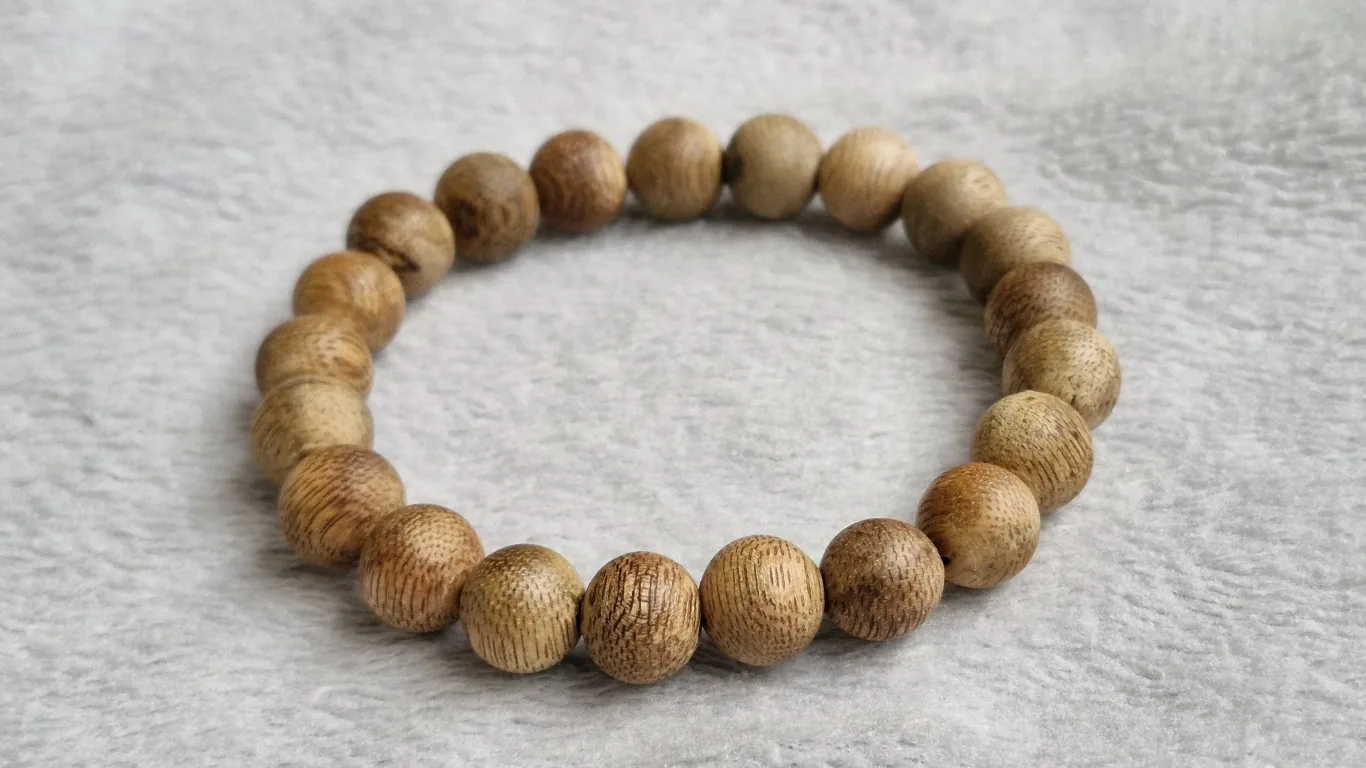
- Grain & Texture: Examine the grain closely. Genuine agarwood from Aquilaria crassna, particularly from Khanh Hoa, will display a natural wood grain, often with subtle pores and a somewhat irregular, organic surface texture. It shouldn’t be perfectly smooth like plastic or have an unnaturally uniform, glossy finish. A slight, natural “waxy” sheen from the resin is normal, but a high-gloss, almost varnished appearance often indicates artificial treatment or polishing.
- Weight & Density: Agarwood is prized for its density, which comes from its heavy resin content. Higher-grade agarwood, particularly “sinking grade,” is dense enough to sink in water due to its significant resin saturation. While not all real agarwood will sink, a bracelet that feels unusually light for its size or feels “hollow” is suspect. Conversely, fakes injected with heavy materials like lead can also feel dense, but without the natural resin patterns.
- Drill Holes: Inspect the drill holes where the string passes through the beads. In real agarwood, the cross-section of the resin and wood grain should be visible, displaying the same organic patterns as the exterior. Injected fakes might show a different color or composition within the drill hole, or even an accumulation of artificial resin that wasn’t absorbed uniformly.
2. The Tactile Test (Touch)
- Texture & Feel: Genuine agarwood, especially unpolished beads, should feel natural and slightly woody, often with a subtle, dry, or slightly waxy texture from the natural resin. It should not feel greasy, sticky, or unnaturally smooth like glass or plastic. Our OudWood Vietnam bracelets are typically unpolished to preserve the raw, natural integrity and allow for optimal dermal-aroma activation.
- Temperature Response: When held in your hand for a few minutes, real agarwood will absorb your body heat and begin to subtly release its aroma. It shouldn’t feel unusually cold or hot. Fakes boiled in wax or oil might feel unnaturally slick or greasy, and the applied substance might rub off onto your skin.
- Residue: Gently rub a bead between your fingers or on a piece of white cloth. Authentic agarwood, especially Grade A and higher, should not leave any significant colored residue. If you see dark streaks or a greasy film, it’s a strong indicator of dye or oil/wax treatment.
3. The Olfactory Examination (Smell)
- Cold Scent: Even at room temperature, real agarwood will possess a subtle, natural, and pleasant aroma. It might be faint, especially for lower grades, but it should be discernible and distinctly woody, sweet, or earthy, without any harsh chemical, perfumed, or artificial notes. Take your time; true agarwood’s scent often requires patience to appreciate.
- Heat Activation (Rubbing): The most definitive olfactory test. Gently rub a bead vigorously between your thumb and forefinger for 10-15 seconds to generate friction and warmth. Then, immediately bring it to your nose. Authentic agarwood will release a more pronounced, complex, and captivating aroma. The scent should evolve, revealing layers of sweetness, warmth, woodiness, and perhaps a subtle spice, a hallmark of Aquilaria crassna from Khanh Hoa. The scent should be pleasant and natural, not headache-inducing. Fakes will either release no smell, a faint chemical odor, a strong synthetic perfume that quickly dissipates, or an acrid, burning plastic smell if injected or dyed.
4. The Burn Test (Caution Advised for Chips, Not Bracelets)
While not recommended for a finished bracelet, if you have a small chip or shard of the same material, a gentle burn test can be highly revealing. When genuine agarwood is gently heated (not burned to a crisp), it should produce a clean, pure, resinous smoke with a sweet, complex, and evolving aroma. It should burn slowly, releasing fragrant oils. If it produces black, sooty smoke, a foul chemical smell, or burns rapidly like ordinary wood, it’s likely fake or heavily adulterated. At OudWood Vietnam, our incense sticks and chips burn clean, thanks to 100% natural agarwood and a natural litsea bark binder, ensuring toxin-free smoke.
5. The Water Test (For Sinking Grades Only)
For high-grade, “sinking” agarwood, a simple water test can confirm its density. True sinking grade agarwood, with its extremely high resin content, will sink immediately and completely in water. Be cautious: some fakes are weighted with lead or other heavy materials to mimic this. This test is only conclusive if combined with other sensory checks and is not applicable to lower grades of real agarwood which may float or partially sink. Most standard agarwood bracelets will float or partially sink, depending on resin content, but should never have an unnaturally rapid descent like a stone.
| Characteristic | Authentic Agarwood Bracelet (e.g., OudWood Vietnam) | Fake Agarwood Bracelet (Common Examples) |
|---|---|---|
| Appearance (Sight) | Natural, uneven dark/light patterns; visible resin veins; matte to slightly waxy sheen; natural wood grain visible. | Uniformly dark; artificial patterns; glossy/varnished finish; no natural grain; visible injection points; dye rubbing off. |
| Texture (Touch) | Natural wood feel; sometimes slightly rough or waxy; not greasy or sticky. Absorbs body heat. | Greasy, sticky, unnaturally smooth, or plasticky. May leave residue. Unresponsive to body heat. |
| Cold Aroma (Smell) | Subtle, natural, woody, sweet, earthy, or spicy scent. Faint but pleasant. | No scent, strong chemical smell, artificial perfume, or unpleasant odor. |
| Heated Aroma (Rubbing) | Pronounced, complex, evolving aroma; sweet, warm, deep, distinctively Vietnamese Aquilaria crassna notes. Natural, non-headache-inducing. | No change, harsh chemical smell, quickly fading artificial perfume, or acrid/plastic smell. |
| Weight/Density | Feels solid, substantial for its size. High grades are very dense (sinking). | Unusually light or unnaturally heavy (due to weighting agents). |
| Residue | No colored or greasy residue when rubbed. | Leaves dark stains or greasy film on skin/cloth. |
| Origin/Sourcing | Transparent, CITES certified (e.g., Khanh Hoa, Vietnam). | Vague origin, no certifications, suspicious low prices. |
Beyond the Senses: Advanced Verification and The Importance of Provenance
While the sensory tests provide a robust first line of defense, truly high-stakes purchases or rare collector’s items might warrant more advanced verification. For professional appraisal, techniques such as microscopy (to examine cell structure), spectroscopy (to analyze chemical composition), and gas chromatography-mass spectrometry (GC-MS) can precisely identify the presence of natural agarwood compounds versus synthetic additives. However, for the average buyer, trusting a reputable source remains paramount.
This leads us to the crucial factor of **provenance**. Knowing the origin of your agarwood is as important as the wood itself. Different regions produce agarwood with distinct characteristics due to variations in Aquilaria species, soil, climate, and local fungi. While agarwood is found across Southeast Asia, Vietnamese agarwood, particularly from the central provinces like Khanh Hoa, is often considered among the finest in the world. Our Aquilaria crassna from Nha Trang is renowned for producing resin with an exceptionally refined, complex, and sweet aroma profile—a true connoisseur’s delight.
The Vietnamese tradition of agarwood harvesting and crafting dates back centuries, with local artisans developing deep expertise in identifying and working with this precious wood. This heritage ensures that traditional, pure methods are often still employed, contributing to the superior quality of the finished product. When you purchase from a brand like OudWood Vietnam, you’re not just buying a bracelet; you’re investing in this rich legacy and the meticulous care that goes into every single bead.
Furthermore, look for **certifications**. The Convention on International Trade in Endangered Species of Wild Fauna and Flora (CITES) ensures that agarwood is sourced legally and sustainably, protecting endangered Aquilaria species. All OudWood Vietnam products are CITES certified, providing transparency and peace of mind. Without CITES certification, a product’s legality and ethical sourcing are questionable. Similarly, for international shipping, TSA compliance is important, which we also ensure, allowing collectors globally to safely receive their treasures.
Be wary of unusually low prices. Genuine agarwood, especially higher grades, is a rare and valuable commodity. Prices fluctuate based on resin content, origin, age, and purity, but a bracelet priced significantly below market averages for authentic agarwood is a major red flag. If it seems too good to be true, it almost certainly is. Investing in a truly authentic piece from a trusted vendor might require a higher initial outlay, but it guarantees a genuine experience and a lasting treasure, free from the health risks associated with unknown chemicals found in fakes.
The OudWood Vietnam Difference: Purity, Craftsmanship, and Unwavering Authenticity
At OudWood Vietnam, our mission is to bring the unparalleled beauty and serene aroma of 100% pure, natural Vietnamese agarwood to the world, free from any deception or adulteration. Our roots in the revered agarwood heartland of Khanh Hoa province (Nha Trang) give us direct access to the finest Aquilaria crassna, ensuring every product we offer is of the highest natural quality.
We stand by an unwavering commitment to purity. When you choose an OudWood Vietnam agarwood bracelet, you are choosing a piece handcrafted from naturally formed resinous wood, never injected with artificial resins, boiled in synthetic oils, or dyed with harmful chemicals. Our production processes for all agarwood products—from incense sticks, cones, and coils to raw chips and essential oil—strictly adhere to the highest standards:
- 100% Pure Natural Agarwood: Sourced directly from sustainably managed forests in Khanh Hoa.
- Natural Litsea Bark Binder (bời lời/楠木皮粉): For our incense products, we use only natural litsea bark powder, a traditional, non-toxic binder that allows the true agarwood aroma to shine through.
- Zero Synthetic Chemicals: No artificial fragrances, phthalates, or other hazardous compounds.
- Zero DPG (Dipropylene Glycol): A common solvent in many commercial fragrances, DPG is completely absent from our pure agarwood essential oils.
- Zero Charcoal Boosters: Unlike many mass-produced incenses, our products rely solely on the natural properties of agarwood, offering a clean, toxin-free burn.
- Zero Artificial Dyes: The color of our agarwood products is entirely natural, reflecting the true resin content and age of the wood.
Our commitment extends to ethical and legal practices. All our agarwood is CITES certified, guaranteeing that its harvest and trade comply with international wildlife protection regulations. Furthermore, our products are TSA compliant, allowing for legal and hassle-free international shipping, so you can enjoy the genuine essence of Vietnamese agarwood wherever you are in the world.
From the distinct resin concentration of our Grade A (15-25% resin) bracelets, offering a rich, enduring aroma, to the extremely dense and complex Sinking Grade pieces, each OudWood Vietnam bracelet is a testament to natural beauty and artisan skill. We believe that true luxury lies in purity and authenticity, allowing you to experience the profound benefits of agarwood—for meditation, yoga, home aromatherapy, or as a cherished heirloom—exactly as nature intended, just as it has been revered in Vietnam for generations.
Caring for Your Authentic Agarwood Bracelet
Once you’ve acquired a genuine agarwood bracelet, proper care will ensure its longevity and preserve its exquisite aroma. Avoid prolonged exposure to direct sunlight, extreme temperatures, and excessive moisture, which can damage the wood and diminish its fragrance. Remove your bracelet before showering, swimming, or engaging in strenuous activities to protect it from water and harsh chemicals. Periodically, gently wipe your bracelet with a soft, dry cloth to remove any accumulated oils or dust. Allowing it to rest occasionally, rather than wearing it 24/7, can also help preserve its natural oils and scent. With mindful care, your OudWood Vietnam agarwood bracelet will remain a cherished companion for years, its aroma deepening and maturing with time.
Frequently Asked Questions About Agarwood Bracelets
What is the difference between Oud and Agarwood?
Oud and agarwood are essentially the same. “Agarwood” refers to the resinous wood itself, while “Oud” (or “Oudh”) is the Arabic term for this precious wood, often used specifically when referring to the oil extracted from it. Both terms are used interchangeably to describe the highly sought-after resinous heartwood of the Aquilaria tree.
How long does the scent of an agarwood bracelet last?
The natural scent of a genuine agarwood bracelet, particularly from higher grades like OudWood Vietnam’s Grade A or Sinking Grade, is long-lasting and evolves with wear. Unlike perfumes that fade quickly, the aroma is activated by body heat and gentle friction, subtly releasing throughout the day. It doesn’t disappear; rather, it becomes a part of your aura, mellowing and deepening over years of wear.
Can I get my agarwood bracelet wet?
It’s best to avoid getting your agarwood bracelet excessively wet. While a little rain won’t ruin it, prolonged exposure to water, especially chlorinated or saltwater, can cause the wood to swell, crack, or lose its natural oils and fragrance over time. Always remove your bracelet before showering, swimming, or washing dishes.
Why is Vietnamese agarwood considered premium?
Vietnamese agarwood, particularly from regions like Khanh Hoa, is highly esteemed due to its unique species of Aquilaria (Aquilaria crassna) and the specific environmental conditions that contribute to its resin formation. It typically yields a distinctively sweet, creamy, and complex aroma profile that many connoisseurs find superior and more refined than agarwood from other origins. The traditional artisan techniques passed down through generations also play a role in its exceptional quality.
What is “sinking grade” agarwood?
“Sinking grade” refers to agarwood that has such an exceptionally high resin content that it is denser than water and will sink when placed in it. This is the highest and rarest grade of agarwood, commanding premium prices due to its intense fragrance, deep color, and remarkable density. While not all real agarwood sinks, sinking grade pieces are highly sought after by collectors.
Is it safe to wear fake agarwood bracelets?
It is generally not safe to wear fake agarwood bracelets. Many fakes are treated with synthetic chemicals, artificial dyes, solvents, heavy metals (like lead for weighting), or low-quality oils. These substances can cause skin irritation, allergic reactions, and may even pose long-term health risks, especially if absorbed through the skin. Always opt for 100% pure, natural agarwood from a reputable source like OudWood Vietnam to protect your health and enjoy the true benefits of this sacred wood.
What does CITES certified mean for agarwood?
CITES (the Convention on International Trade in Endangered Species of Wild Fauna and Flora) certification for agarwood means that the product has been legally sourced and traded in compliance with international regulations aimed at protecting endangered species. This ensures that the Aquilaria trees were harvested sustainably and that the trade does not threaten their survival. OudWood Vietnam proudly adheres to CITES standards, ensuring ethical and responsible sourcing.
How do I know what grade of agarwood I’m buying?
Reputable vendors will clearly state the grade of agarwood they are selling, often indicating the estimated resin content (e.g., Grade A with 15-25% resin). Higher grades will have darker colors, denser weight, and a more pronounced, complex, and evolving aroma. If a seller is vague about grading or only refers to “natural agarwood” without further specifics, proceed with caution. At OudWood Vietnam, we transparently classify our agarwood from Grade D up to Ky Nam/Kyara, providing clarity and confidence in your purchase.
Do agarwood bracelets offer health benefits?
While not a medical device, agarwood has been traditionally revered for its calming and meditative properties. Its natural aroma is known to promote relaxation, reduce stress, enhance mental clarity, and aid in spiritual practices. Many users find that wearing an agarwood bracelet contributes to a sense of peace and well-being. By choosing 100% pure agarwood from OudWood Vietnam, you ensure you’re experiencing these benefits without exposure to harmful synthetic chemicals.
Identifying an authentic agarwood bracelet is an art and a science, a journey of sensory exploration and informed discernment. By understanding the characteristics of genuine Vietnamese Aquilaria crassna and recognizing the common tricks of counterfeiting, you empower yourself to make a truly valuable and authentic choice. At OudWood Vietnam, we are committed to upholding the integrity of this sacred wood, offering only the purest, CITES-certified agarwood from the heart of Khanh Hoa. We invite you to explore our collection of exquisite agarwood bracelets, incense, and oils, and experience the unparalleled purity and serene aroma that only nature can provide. Protect your health, honor tradition, and invest in true authenticity. Discover the OudWood Vietnam difference today.
Frequently Asked Questions (FAQ)
Why are counterfeit agarwood bracelets so common online?
Because wild sinking agarwood can command thousands of dollars per ounce, dishonest manufacturers use high-pressure autoclaves to inject industrial dyes, shoe polish, or synthetic fragrance oils into cheap balsa or common timber, replicating the color of genuine old-growth Aquilaria.
Does genuine wild agarwood ever permanently lose its scent?
No. The resin inside genuine agarwood is non-volatile and formed within the internal wood cells. It can become muted if covered in skin oil, body lotions, or dust, but gently wiping with a damp microfiber cloth and resting in an airtight glass container will always revive the authentic scent.
Can fake agarwood cause skin allergies or headaches?
Yes. Chemically enhanced fake bracelets often contain cheap industrial solvents, nitro-musks, and artificial fixatives that cause contact dermatitis and migraine headaches upon direct skin contact.
📌 Essential Collector Guides & Sinking Bracelets:
- Pillar Connoisseur Guide: The Most Expensive Agarwood Bracelets (Japanese Sinking Kinam Valuation)
- Authentication Guide: How to Spot Fake vs Real Agarwood Bracelets (7 Collector Tests)
- Market Price Benchmark: Agarwood Price Per Kg 2026 (Wild vs Cultivated Rates)
- Featured Sinking Piece: Japanese Sinking Kinam Bracelet (100% Wild Khanh Hoa Beads)
- Shop Collection: Browse All Authentic Vietnamese Agarwood Bracelets
Experience 100% Pure Vietnamese Agarwood
Looking for genuine wild Nha Trang sinking bracelets, natural meditation incense, or artisanal oud oils? OudWood Vietnam sources ethically certified, CITES-compliant aromatic treasures directly from the heart of Vietnam.

Oud Wood Agarwood Chips
Hoi An Oud Wood Agarwood Chips | Doi De A | Grade A++ | 20g
Oud Wood Agarwood Chips
Khanh Hoa Oud Wood Agarwood Chips | Chop Mu A | Grade A++ | 20g
Oud Wood Agarwood Chips
Natural Oud Wood Agarwood Chips | Mo | Grade A | 30g