
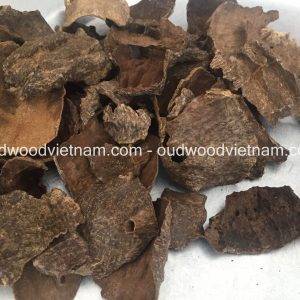
 Natural Oud Wood Agarwood Chips | Mo | Grade A | 30g
 Subtotal: $100.00
Uncategorized
Why Vietnamese Agarwood Has a Sweet Vanilla Scent
Why Vietnamese Agarwood Has a Sweet Vanilla Scent
🖋️ Appraiser’s Note: As a Master Agarwood Appraiser based in Tu Son, Vietnam, I frequently receive questions about the origin of vanilla notes. Let’s bypass the marketing myths and look at the physical facts.
The Verdict: Resin-Sugar Molecular Complexity
The sweet, lactonic vanilla profile inherent in high-grade Vietnamese agarwood is the result of the specific sesquiterpene composition within the Aquilaria crassna resin. It is not an additive. In genuine specimens, this sweetness emerges from the natural breakdown of aromatic compounds during the infection process. Conversely, commercial fakes often mimic this via vanillin-based chemical infusion, which lacks the structural depth and organic volatility of true resinous wood.

Thermal & Physical Analysis: The Tu Son Approach
When subjected to heat, true Vietnamese agarwood releases a complex olfactory profile. The “vanilla” scent is actually a high-frequency note produced by the oxidation of specific agarofurans and chromones unique to the soil conditions of the Central Highlands. In my lab here in Tu Son, we observe that genuine chips undergo a “scent evolution”—starting with a sharp, woody top note that transitions into a creamy, balsamic sweetness as the resin melts. Chemical fakes, however, are saturated with synthetic vanillin or coumarin; these exhibit a “flat” scent that remains static and cloying, often leaving a bitter, acrid residue on the heating element. Genuine Aquilaria crassna requires no external catalysts to produce this sweetness; it is a manifestation of the tree’s immune response, crystallized over decades of slow, natural maturation within the heartwood.
| Appraisal Feature | Authentic OudwoodVietnam (KNSI) | Fake / Commercial Grade (Chemical) |
|---|---|---|
| Scent Evolution | Dynamic, shifting from woody to creamy | Static, one-dimensional sweet scent |
| Resin Quality | Natural sesquiterpene crystallization | Surface-level synthetic infusion |
| Physical Appearance | Deep, irregular resin deposits | Uniform, artificially darkened pores |
The Ultimate Solution: Trust the KNSI Standard
To avoid synthetic traps and ensure you are getting genuine investment-grade Aquilaria Crassna, you must rely on strict appraisal matrices. Read our complete 2026 Master Guide to the KNSI Standard to verify authenticity and protect your health and investment.

Oud Wood Agarwood Chips
Hoi An Oud Wood Agarwood Chips | Doi De A | Grade A++ | 20g
Oud Wood Agarwood Chips
Khanh Hoa Oud Wood Agarwood Chips | Chop Mu A | Grade A++ | 20g
Oud Wood Agarwood Chips
Natural Oud Wood Agarwood Chips | Mo | Grade A | 30g