
Oud Agarwood
How to Build a Dark Glossy Patina on Your Agarwood Bracelet
Apr
As a Master Agarwood Appraiser based in Tu Son, Vietnam, I’ve dedicated decades to understanding the intricate beauty and science behind authentic agarwood. Among the most frequent inquiries I receive at OudWood Vietnam is the aspiration to achieve that coveted, deep, dark patina on an agarwood bracelet. It’s a mark of true authenticity, a testament to time, and a deeply personal journey between wearer and wood.
Forget the shortcuts, the quick fixes, and the marketing myths promising instant results. A genuine patina isn’t a cosmetic application; it’s an organic evolution, a profound transformation that speaks volumes about the quality of your agarwood and your dedication to its care. At OudWood Vietnam, we celebrate this natural process, offering only 100% pure, natural agarwood from the heartland of Khanh Hoa province, Vietnam – the esteemed Aquilaria Crassna species, renowned globally for its unparalleled resin quality and aromatic depth.
The Unseen Alchemy: Defining a True Agarwood Patina
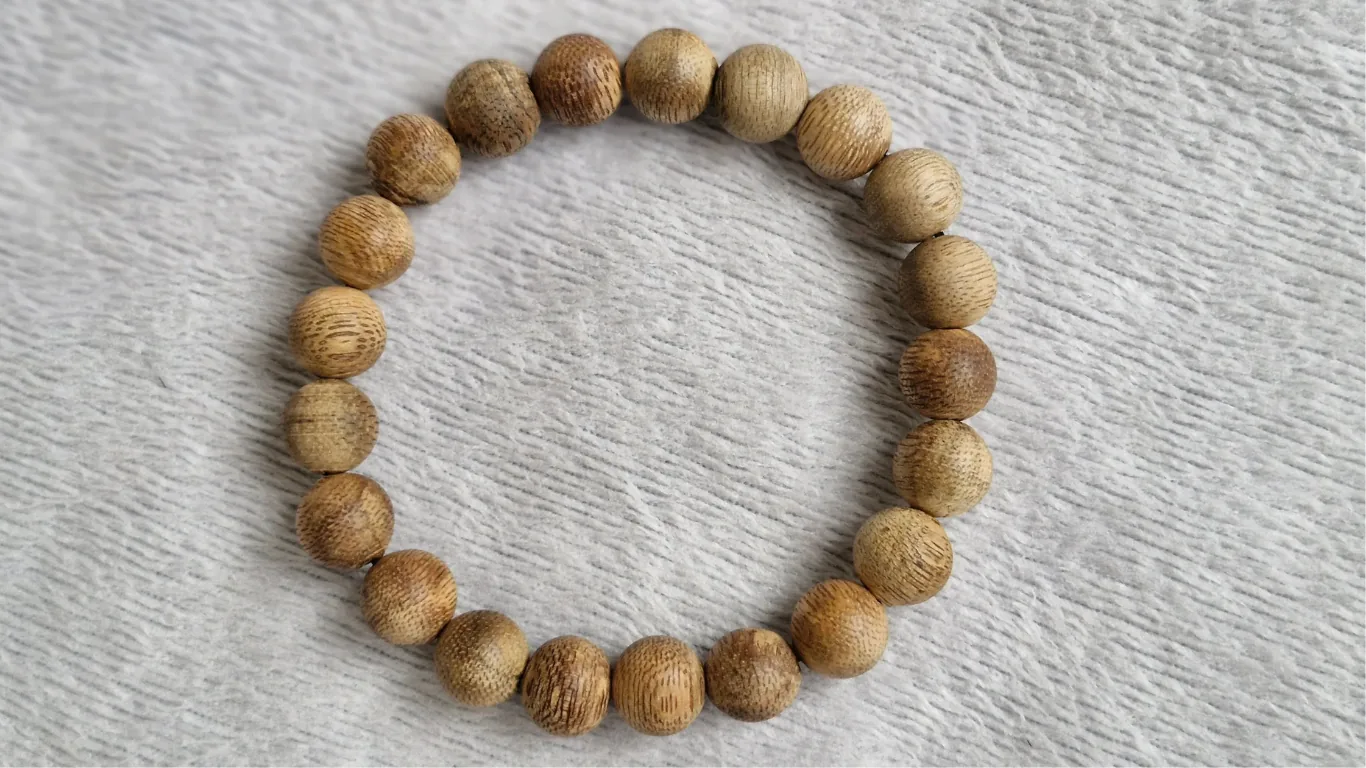
To truly appreciate the journey of patina development, we must first understand what it is, and perhaps more importantly, what it is not. A true agarwood patina is not merely a surface stain or a layer of grime. It is a profound, structural metamorphosis within the very fibers of genuine Aquilaria Crassna wood, resulting in a rich, translucent luster that appears to emanate from within. This transformation manifests as the wood gradually darkens, often developing nuanced shades of deep brown, reddish-brown, or even near-black, depending on the initial resin concentration and the wood’s specific characteristics.
The genesis of this deep, coveted color lies in a fascinating interplay of biological and physical factors. Primarily, it’s the result of long-term oxidation of the complex resinous compounds embedded within the agarwood. These resins, naturally produced by the Aquilaria Crassna trees in response to infection, are rich in sesquiterpenes, chromones, and other volatile organic compounds that are susceptible to slow, ambient oxidation when exposed to air over extended periods. This process is akin to how fine antique wood furniture deepens in color over centuries, or how a piece of pure silver develops a unique sheen – it’s a natural aging process that enhances beauty and character.
Beyond oxidation, the crucial catalyst in a bracelet’s patina development is consistent, intimate contact with the wearer’s skin. The human body is a living, breathing mechanism, constantly secreting natural dermal oils, microscopic sweat, and possessing a subtle, consistent warmth. When a genuine agarwood bracelet is worn day in and day out, these elements interact with the wood. The natural body heat slightly warms the bracelet, causing the internal resins to become more mobile, drawing them infinitesimally closer to the surface. Simultaneously, the dermal oils from the skin are slowly absorbed into the porous, resin-rich structure of the agarwood, saturating the microscopic channels and pores. This absorption, coupled with ongoing oxidation, creates the sought-after depth and sheen that defines a true patina.
It’s a process of integration and interaction, where the essence of the wearer subtly merges with the essence of the wood. This is why no two patinas are ever exactly alike, even on bracelets from the same batch. Each patina tells a unique story of its journey and its wearer, making it a highly personal and cherished attribute.
The Quintessence of Quality: Why Genuine Aquilaria Crassna is Non-Negotiable
The foundation of a magnificent patina is, without question, the quality and authenticity of the agarwood itself. At OudWood Vietnam, our unwavering commitment is to 100% pure, natural agarwood, primarily sourced from the highly revered Aquilaria Crassna species indigenous to Khanh Hoa province, Vietnam. This commitment is not merely a branding statement; it is the absolute prerequisite for any genuine patina to form.
Why is the species and origin so critical? Aquilaria Crassna from regions like Nha Trang, Khanh Hoa, is globally acclaimed for its superior resin content and unique aromatic profile. The specific environmental conditions – the soil, climate, and elevation – contribute to the distinct quality of the resin produced by these trees. This resin, a dense, dark oleoresin, is the very soul of agarwood, and it is the abundance and integrity of this resin that determines a bracelet’s potential for patina development.
Consider the grading system we employ at OudWood Vietnam, which ranges from our highest Ky Nam/Kyara grade, through Grade A (15-25% resin content), Grade B, Grade C, and Grade D, all the way to Sinking Grade. The higher the resin content, the denser and more substantial the wood, and crucially, the more “material” there is for oxidation and dermal oil absorption to act upon. A bracelet crafted from high-grade agarwood, rich in natural resin, possesses the inherent capacity for this transformative journey. The resin acts like a canvas, ready to absorb and oxidize, slowly deepening in color and translucence over time.
In contrast, low-grade agarwood or wood from less resinous species will exhibit a much lesser, if any, patina. Wood with minimal resin simply lacks the chemical compounds necessary for a significant oxidative change, and its porous structure might absorb oils without the same dramatic darkening effect or translucent sheen. It will merely look dull or dirty, rather than developing that coveted inner glow.
This is where the integrity of our sourcing and crafting processes at OudWood Vietnam becomes paramount. We ensure every bead in our bracelets is genuine, untreated Aquilaria Crassna, preserving its natural resinous structure. This dedication to purity means that when you wear an OudWood Vietnam bracelet, you are engaging with a living material destined to evolve, to deepen, and to tell a story through its developing patina. It’s an investment in a piece of nature that truly grows with you.
Distinguishing the Authentic from the Artificial: A Patina Perspective
The desire for a dark agarwood bracelet has unfortunately led to a proliferation of fakes and artificially treated pieces in the market. As a Master Appraiser, I cannot stress enough the importance of distinguishing between a genuine, naturally developed patina and an artificial surface treatment. This distinction is not just about aesthetics; it’s about the very integrity and value of your investment, and the experience you seek.
Many unscrupulous vendors attempt to mimic the dark allure of a patina using cheap dyes, synthetic resins, or chemical stains. These methods are designed to deceive, to give the illusion of aged, high-quality agarwood without any of the natural properties. Such “treated” bracelets typically appear uniformly dark from day one, often with an opaque, painted-on look rather than the deep, translucent luster of genuine agarwood. The tell-tale signs are often immediate: the color may rub off on your skin or clothes, especially when exposed to moisture or friction. Over time, these artificial coatings can peel, fade unevenly, or even develop a patchy appearance as the underlying, lighter wood becomes exposed.
Furthermore, these artificial treatments fundamentally compromise the wood’s ability to “breathe” and interact with its environment. Synthetic resins and dyes often clog the natural pores of the agarwood, creating a barrier that prevents the absorption of dermal oils and the slow, essential process of oxidation. This means that an artificially dyed bracelet will never develop a true patina; it will only degrade, losing its false luster rather than gaining natural depth. The distinctive, evolving fragrance of natural agarwood is also often muted or entirely absent in fake pieces, replaced by chemical smells or nothing at all.
At OudWood Vietnam, our USP is our commitment to 100% pure, natural agarwood from Khanh Hoa, free from synthetic chemicals, DPG, charcoal boosters, or artificial dyes. This transparency is crucial because only such pure material can undergo the natural transformation of a true patina. Our CITES certification further attests to the legal and ethical sourcing of our *Aquilaria Crassna*. When you choose an OudWood Vietnam bracelet, you are choosing a piece that is designed to age gracefully, to deepen in character, and to evolve with you in a truly organic way, rather than a superficial imitation.
| Feature | Genuine Agarwood Patina | Artificial Dyes/Treatments |
|---|---|---|
| Appearance | Deep, translucent luster; color appears to come from within; subtle variations in shade. | Opaque, flat, painted-on look; uniform color; often dull or excessively shiny. |
| Formation Time | Slow, gradual process over months to years of wear. | Immediate “darkness” from the moment of purchase. |
| Interaction with Skin | Absorbs natural dermal oils, enhancing depth; doesn’t rub off. | May leave residue or stain skin/clothing; surface level interaction. |
| Longevity & Evolution | Deepens, darkens, and gains character over time; becomes more beautiful with age. | Fades, peels, or degrades over time, exposing lighter wood underneath. |
| Scent Profile | Evolves subtly with wear, becoming richer; distinct natural agarwood aroma. | Muted or absent natural scent; may have chemical odor. |
| Pore Structure | Open, allows for absorption and oxidation. | Clogged by dyes/resins, preventing natural interaction. |
| Value | Increases with age and genuine patina; collector’s item. | Decreases significantly as treatments wear off; little to no resale value. |
Mastering the Art of Wear: Cultivating Your Bracelet’s Soul
Developing a rich, dark patina on your agarwood bracelet is not a passive event; it’s an active partnership between you and your precious wood. It requires consistent interaction, mindfulness, and a commitment to proper care. Think of it as cultivating a living piece of art, where your personal touch is the brushstroke that adds depth and character.
The single most important factor is consistent wear. Your agarwood bracelet thrives on continuous contact with your skin. The warmth of your body, typically around 37°C (98.6°F), plays a pivotal role. This gentle, sustained heat slightly mobilizes the internal resins within the Aquilaria Crassna beads, encouraging them to migrate towards the surface. As they reach the surface, they encounter the subtle oils and moisture from your skin, and, crucially, the oxygen in the air. This constant cycle of resin movement, dermal absorption, and oxidation is the engine of patina development. Wearing your bracelet daily, for extended periods, rather than intermittently, will significantly accelerate and deepen this process.
Maintaining clean skin is equally vital. While dermal oils are beneficial, excessive dirt, lotions, perfumes, or harsh chemicals are not. Before putting on your bracelet, ensure your wrist is clean and dry. Avoid wearing your bracelet immediately after applying heavy lotions or strong colognes, as these can create a barrier or introduce unwanted substances that hinder natural absorption and could potentially damage the wood or alter its natural fragrance. The idea is to allow the pure agarwood to interact with your pure skin oils.
The environment your bracelet is exposed to also plays a subtle role. While the process is internal, ambient humidity and air quality can influence the rate of oxidation. Moderate exposure to fresh air, rather than being constantly sealed away, is beneficial. However, direct, intense sunlight should be avoided, as it can dry out the wood too quickly or cause uneven color changes. Similarly, prolonged submersion in water is detrimental, as it can cause the wood to swell, crack, or leach out precious resins. Removing your bracelet for showers, swimming, or strenuous activities involving heavy sweating is always recommended.
Beyond the physical aspects, wearing your agarwood bracelet can be a deeply personal and spiritual journey. Many of our customers use their bracelets for meditation, yoga, or simply as a constant reminder of mindfulness. The evolving scent, initially fresh and subtly woody, deepens and becomes richer as the resins oxidize and interact with your personal chemistry. This olfactory transformation, coupled with the visual darkening, creates a multi-sensory experience that connects you more profoundly to this precious gift from nature. It’s a testament to Vietnamese artisan traditions, where items like agarwood are cherished for their lasting beauty and spiritual resonance.
The Legacy of Vietnamese Agarwood: Beyond Patina
While the development of a dark patina is a coveted aesthetic, the true value of an authentic agarwood bracelet from OudWood Vietnam extends far beyond its visual transformation. It embodies a legacy of ancient traditions, ecological stewardship, and a profound connection to nature that is deeply ingrained in Vietnamese culture, particularly in regions like Khanh Hoa and Nha Trang, the heartland of premium Aquilaria Crassna.
Vietnamese agarwood, especially the Aquilaria Crassna species, holds a unique and revered status in the global oud community. Compared to agarwood from other origins such as Indonesia, Malaysia, or India, Vietnamese agarwood is often celebrated for its distinctively complex and sweet aroma profile, characterized by rich honeyed notes, subtle spice, and sometimes a hint of florals or even a creamy vanilla undertone. This unparalleled fragrance is a direct result of the specific terroir and the genetic makeup of the trees in our region. This inherent quality means that as your bracelet develops its patina, its fragrance will also evolve, becoming richer, deeper, and more nuanced, a truly holistic sensory journey.
For centuries, agarwood has played a significant role in Vietnamese spiritual practices, meditation, and traditional medicine. Bracelets are not just fashion accessories; they are often worn as talismans for good fortune, peace, and spiritual protection. The act of wearing, caring for, and witnessing the transformation of an agarwood bracelet becomes a meditative practice in itself, fostering a sense of patience, appreciation, and connection to something natural and enduring. This makes it an ideal companion for yoga practitioners, those seeking mindful living, or anyone desiring a tangible link to serenity amidst the hustle of modern life.
Furthermore, an agarwood bracelet from OudWood Vietnam represents a luxury gift that speaks volumes. It’s not merely an item; it’s an experience, a piece of living heritage, and a profound symbol of discerning taste and appreciation for genuine craftsmanship. For collectors, the evolving patina only adds to its intrinsic value, marking it as a unique piece that has journeyed through time with its owner, collecting stories and character. Our adherence to CITES certification and transparent sourcing ensures that this legacy is preserved for future generations, allowing you to enjoy your agarwood with complete peace of mind, knowing its origins are ethical and sustainable.
Caring for Your Developing Patina: Best Practices for Longevity
As your agarwood bracelet embarks on its journey towards a beautiful, dark patina, thoughtful care is essential to ensure its longevity and to facilitate its natural transformation. Proper maintenance not only preserves the wood but also enhances the patina development process, allowing the unique characteristics of our Khanh Hoa Aquilaria Crassna to shine through.
- Keep it Clean, Naturally: The ideal cleaning method is simple and non-invasive. Gently wipe your bracelet with a soft, dry, lint-free cloth periodically, perhaps once a week or whenever you notice any surface buildup. This removes dust, superficial grime, and residual oils (both natural and environmental) that might hinder the natural absorption process. Avoid using water, soap, or chemical cleaners, as these can strip natural resins, cause swelling, or leave residues that prevent proper patina formation.
- Mind Your Moisture: Agarwood, while robust, is organic. Avoid prolonged exposure to water. This means removing your bracelet before showering, swimming, washing dishes, or engaging in activities where it might get thoroughly wet. Water can cause the wood to swell, potentially cracking the beads or weakening the string. It can also dilute and wash away precious surface resins, slowing down patina development and diminishing the fragrance.
- Avoid Harsh Chemicals and Scents: Perfumes, colognes, lotions, hand sanitizers, and household cleaning products contain chemicals that can be detrimental to agarwood. These substances can create a barrier on the wood’s surface, preventing the absorption of your natural dermal oils crucial for patina. They can also chemically react with the resins, altering the wood’s color in an unnatural way, or even permeating the wood to permanently alter its exquisite natural scent. Always apply such products and allow them to fully dry and absorb before putting your bracelet back on.
- Store with Care: When not being worn, store your agarwood bracelet in a cool, dry place away from direct sunlight and extreme temperature fluctuations. A soft pouch or a dedicated jewelry box is ideal. Avoid storing it in airtight containers for very long periods without air circulation, as agarwood benefits from some exposure to air for the oxidation process.
- Handle with Respect: While genuine agarwood is quite durable, rough handling can lead to scratches or damage. Treat your bracelet with the respect it deserves as a precious, natural artifact. Avoid knocking it against hard surfaces.
- Patience is Key: Remember, a true patina is a testament to time and interaction. It’s not an overnight transformation. Embrace the slow, evolving beauty of your bracelet. The gradual deepening of color, the subtle changes in scent – these are signs of an authentic journey.
By following these simple yet effective care practices, you are not just maintaining a piece of jewelry; you are nurturing a living treasure, allowing the natural splendor of OudWood Vietnam’s genuine agarwood to reach its full potential, culminating in a patina that is uniquely yours.
How long does it take to develop a dark patina on an agarwood bracelet?
The development of a noticeable dark patina is a slow, gradual process that typically takes anywhere from 6 months to several years of consistent wear. Factors like the initial resin content of the agarwood (higher grades develop faster), the wearer’s skin chemistry, and consistency of wear all play a role. Patience is truly key for this natural transformation.
Can I speed up the patina process?
You cannot significantly speed up the natural patina process without compromising the integrity of the agarwood. Attempts to use artificial oils, waxes, or chemicals will result in a surface coating rather than a true patina, and can damage the wood. Consistent daily wear on clean skin is the most effective and natural way to encourage development.
What if my agarwood bracelet gets wet?
Avoid prolonged submersion in water. If your bracelet accidentally gets wet, gently pat it dry immediately with a soft, lint-free cloth and allow it to air dry completely in a cool, shaded area. Regular exposure to water can cause the wood to swell, crack, leach out resins, and diminish its fragrance and patina potential.
How do I clean my agarwood bracelet?
For regular cleaning, simply wipe your bracelet with a soft, dry, lint-free cloth. This removes surface dust and grime without stripping the natural oils or interfering with the patina process. Avoid water, soaps, or chemical cleaners.
Does the scent of the bracelet change with patina development?
Yes, as the agarwood ages and develops a patina, its natural fragrance typically deepens and becomes richer. The oxidation of resins and absorption of skin oils can enhance the complexity and longevity of the scent, making it even more nuanced and personal to the wearer.
How can I tell if my agarwood bracelet is genuine?
Genuine agarwood will often have natural variations in color and grain, a distinct, complex woody-sweet fragrance that doesn’t fade, and a weight consistent with its resin content (sinking grade is very dense). When rubbed, it usually doesn’t leave a black residue. Artificial fakes often have a uniform, painted-on look, lack natural scent, or feel unusually light/heavy, and may rub off black residue. Always purchase from reputable, certified sources like OudWood Vietnam, which offers CITES certified *Aquilaria Crassna*.
Why is Vietnamese Aquilaria Crassna considered superior for bracelets?
Vietnamese Aquilaria Crassna, particularly from regions like Khanh Hoa, is renowned globally for its exceptionally high resin content and superior, complex aromatic profile. This translates to denser, more beautiful beads that possess a greater potential for developing a profound, translucent patina and an evolving, exquisite fragrance, making it highly prized by connoisseurs and collectors.
The journey to a dark, lustrous patina on your agarwood bracelet is one of patience, appreciation, and a deep connection to nature’s marvels. It’s a testament to the authentic quality of Aquilaria Crassna from Khanh Hoa, Vietnam, and a reflection of your own unique story. Explore our exquisite collection of genuine agarwood bracelets and other fine agarwood products at OudWood Vietnam, and begin your own personal journey with this magnificent wood today.

Oud Wood Agarwood Chips
Hoi An Oud Wood Agarwood Chips | Doi De A | Grade A++ | 20g
Oud Wood Agarwood Chips
Khanh Hoa Oud Wood Agarwood Chips | Chop Mu A | Grade A++ | 20g
Oud Wood Agarwood Chips
Natural Oud Wood Agarwood Chips | Mo | Grade A | 30g