Oud Agarwood
Agarwood Tree Price: What an Oud Tree Is Worth (Vietnam, 2026)
Nov
Quick answer: In Vietnam an inoculated agarwood (Aquilaria crassna) plantation tree typically sells for about 15–50 million VND (roughly $600–$1,900), judged by how much agarwood the buyer thinks is inside. Raw cultivated agarwood cut from such trees sells for about 15–30 million VND per kg (roughly $600–$1,200). Wild agarwood is not sold by the tree at all: it is found, not grown, and costs several times more. Figures of hundreds of thousands of dollars per tree that circulate online are projections, not market prices.
Two ways agarwood trees are sold
In Vietnam plantation agarwood changes hands in two ways: as a whole standing tree, or as wood by the kilo after the tree has been cut and the agarwood separated.
1. The whole tree
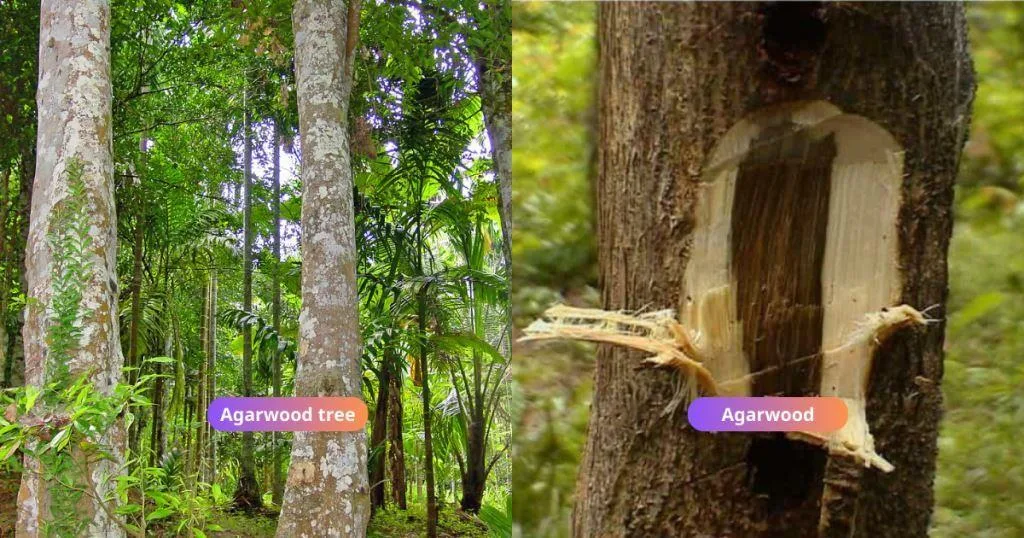
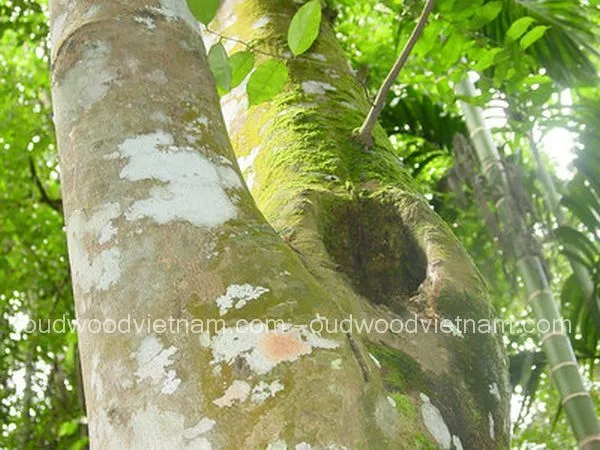
The buyer cannot see inside the trunk, so he judges from the outside. He looks at the shape of the tree and where it was drilled or wounded, then scrapes the wounded spots with a knife to see how dark and oily the wood has become and how far the agarwood has spread. On that basis he makes one offer for the whole tree. In Vietnamese this is called buying vo – on estimate. A typical inoculated tree sells for about 15–50 million VND (roughly $600–$1,900 at about 25,900 VND to the dollar). The buyer takes the risk: a tree can turn out richer or poorer than it looked.
2. By the kilo
The other way is to cut the tree and sell the agarwood itself. Raw cultivated agarwood – with the plain white wood roughly removed but not yet cleaned – sells for about 15–30 million VND per kg (roughly $600–$1,200) for ordinary material.
What decides the price of an agarwood tree
- How much agarwood has formed. This is everything. A tree with dark, oily wood spreading far from each wound is worth far more than one where the colour stops just around the holes.
- How long since inoculation. Trees are inoculated at about five years old or more. Agarwood starts to form within about six months, but the longer it has to build up, the more there is. Because the inoculants are expensive, most growers harvest after one to two years to get their money back – which keeps cultivated agarwood cheap and light in resin.
- The method. Drilling, chiselling, microbial inoculants or other agents all work differently, and the results are still uneven from tree to tree.
- Where it grew. Trees on the hot central coast (Khanh Hoa, Quang Nam) give better-smelling agarwood than trees inland, and trees in northern Vietnam rarely form agarwood at all. See Vietnamese agarwood by region.
From tree to chips: why finished agarwood costs more
After cutting, the raw wood still has to be cleaned by hand – the pale wood carved away – then sorted and graded. Much of each tree ends up as low-grade material. That is why finished, graded chips cost more per kilo than raw wood: our cultivated Grade B chips cost $1,350 per kg.
| Stage | Typical price in Vietnam |
|---|---|
| Inoculated plantation tree, sold whole | 15–50 million VND per tree (≈ $600–$1,900) |
| Raw cultivated agarwood, roughly cut | 15–30 million VND per kg (≈ $600–$1,200) |
| Cleaned, graded cultivated chips (our shop) | $1,350 per kg |
| Wild agarwood chips (our shop) | $1,530–$8,100 per kg |
| Wild Sink and Soil wood (our shop) | $21,600–$31,500 per kg |
Why wild agarwood has no “tree price”
Wild agarwood is not grown – it is found. Hunters go into the forest in groups of 5–10 for 15 days to a month and may come back with a few hundred grams, or nothing. The wood they find has been forming for decades, which is why wild agarwood costs several times more than cultivated. See why agarwood is so expensive.
A note on “$24,000 per tree” claims
In some countries, especially where agarwood farming is new, you will see promotional figures of tens or hundreds of thousands of dollars per tree, or millions per kilo. These usually multiply an optimistic yield by the price of the very best wild wood. Plantation trees do not produce wild-grade wood. If you are thinking of planting agarwood, base your plans on what raw cultivated wood actually sells for – in Vietnam, about 15–30 million VND per kg – and on the cost of inoculation and the years of waiting.
Shipping
We sell finished agarwood chips, not trees. We ship door-to-door worldwide and take full responsibility until your parcel arrives. Delivery takes up to 21 days — usually 5–6 days by UPS Express. Shipping is a flat $79 per order and free on orders of $1,500 or more.
Frequently asked questions
How much is an agarwood tree worth?
In Vietnam an inoculated plantation tree typically sells whole for about 15–50 million VND (roughly $600–$1,900), depending on how much agarwood the buyer expects inside.
What is the agarwood tree price per kg?
Raw cultivated agarwood from plantation trees sells for about 15–30 million VND per kg (roughly $600–$1,200) in Vietnam. Cleaned and graded cultivated chips cost more; ours are $1,350 per kg.
How do buyers value an agarwood tree?
They look at the shape of the tree and where it was wounded, scrape the wounded spots to see how dark and oily the wood is, and make one offer for the whole tree.
How long until an agarwood tree can be harvested?
Trees are inoculated at about five years old or more; agarwood starts to form within about six months, and most growers harvest one to two years after inoculation.
Why is wild agarwood more expensive than plantation agarwood?
Wild agarwood has been forming for decades and has to be found in the forest, often after weeks of searching. Plantation agarwood is harvested within a couple of years and holds much less resin.

Oud Wood Agarwood Chips
Hoi An Oud Wood Agarwood Chips | Doi De A | Grade A++ | 20g
Oud Wood Agarwood Chips
Khanh Hoa Oud Wood Agarwood Chips | Chop Mu A | Grade A++ | 20g
Oud Wood Agarwood Chips
Natural Oud Wood Agarwood Chips | Mo | Grade A | 30g