
Oud Agarwood
Museum Grade Kyara Agarwood for Collectors: The Ultimate Guide
Jun
In the rarefied world of natural aromatics, few substances command the awe, reverence, and stratospheric value of Kyara agarwood. For the discerning collector, the pursuit of “Museum Grade Kyara” transcends a mere acquisition; it is an odyssey into the soul of a fragrant legend, a quest for a piece of history imbued with unparalleled aromatic complexity and spiritual significance. At OudWood Vietnam, nestled in the heart of Khanh Hoa province, we understand this profound appreciation, as we have dedicated generations to the sacred art of agarwood, particularly the elusive Ky Nam, which is our local term for this highest echelon of agarwood.
This ultimate guide is crafted for serious enthusiasts and collectors, offering an authoritative journey into the world of Kyara. We will unravel its mysteries, from its miraculous formation deep within the Aquilaria tree to the meticulous art of its evaluation, providing you with the expert knowledge needed to navigate this exclusive domain.
The Quintessence of Rarity: What Defines Museum Grade Kyara Agarwood?
Kyara, or Ky Nam as it is known in Vietnam, isn’t just high-grade agarwood; it is an entirely distinct phenomenon. Its definition as “Museum Grade” elevates it beyond commercial classifications, placing it firmly in the realm of cultural heritage and unparalleled natural artistry. This classification signifies an agarwood specimen that embodies the absolute pinnacle of quality across multiple dimensions: aromatic profile, resin saturation, age, provenance, and historical significance. It is a material so scarce, so profound, that it belongs in the hallowed halls of private collections and institutional exhibits, cherished as a testament to nature’s most exquisite alchemy.
The rarity of Kyara stems from a confluence of improbable factors. Firstly, the specific conditions required for its formation are extraordinarily precise and unpredictable. Unlike common agarwood, which can develop in many Aquilaria trees, Kyara demands a rare strain of fungal infection, a specific tree species (primarily Aquilaria crassna in Vietnam), and environmental stressors—such as lightning strikes, insect attacks, or deep wounds—that initiate a highly complex and prolonged defense mechanism. Secondly, the maturation process takes not years, but often centuries, for the resin to fully harden, deepen in color, and develop its legendary aromatic complexity. Many pieces of Museum Grade Kyara predate modern history, having been formed in ancient forests untouched by human intervention.
Historically, Kyara was reserved for emperors, kings, and high-ranking spiritual leaders across Asia. Its incense was believed to purify spaces, deepen meditation, and facilitate communication with the divine. The Japanese incense ceremony, Koh-do, reveres Kyara as its ultimate offering, a fragrant bridge to transcendence. Today, the continued depletion of old-growth Aquilaria forests, coupled with the slow, unpredictable nature of Kyara formation, makes genuinely old, wild-harvested Museum Grade Kyara an almost mythical treasure. It is a finite resource, one that is becoming increasingly scarce with each passing year, further solidifying its “Museum Grade” status as an artifact of immense value and delicate beauty.
At OudWood Vietnam, our expertise is built upon generations of working with agarwood from the pristine forests of Khanh Hoa province. We understand that Kyara represents the highest expression of our craft and our heritage. Our commitment lies in discerning and honoring these rare pieces, ensuring their authenticity and preserving their legacy for the most discerning collectors.
The Miraculous Metamorphosis: Science and Artistry Behind Kyara Formation
The journey from a common Aquilaria tree to a piece of Museum Grade Kyara is nothing short of miraculous, a symphony of botanical science and natural artistry orchestrated over centuries. While all agarwood results from a tree’s defense mechanism against a fungal infection, Kyara formation is an exceedingly rare and specific manifestation of this process, particularly within the Aquilaria crassna species prevalent in Vietnam’s central highlands, especially around Khanh Hoa and Nha Trang.
The initial trigger is typically a specific fungal infection, often believed to be a variant of Phialophora parasitica, which penetrates the tree’s heartwood through an injury. Unlike simpler infections that lead to standard agarwood, the Kyara-producing fungus interacts with the tree in a profoundly complex manner. The tree’s immune response involves producing a unique array of volatile organic compounds, primarily sesquiterpenes, but also furanones, chromones, and other oxygenated compounds. In Kyara, these resins are not merely produced; they undergo a prolonged process of chemical transformation and molecular rearrangement within the wood cells. This deep cellular change is what gives Kyara its distinct density, its waxy, almost pliable texture, and its unparalleled, multi-layered aroma.
The unique cellular structure of Kyara allows it to retain these volatile compounds in a state of perfect preservation, locking in an aromatic profile that is both incredibly rich and remarkably stable. The resin content in true Kyara can be exceptionally high, often exceeding 50-60% by weight, although the appearance might not always show dark, dense resin veins typical of high-grade agarwood. Instead, Kyara often appears in shades of green, brown, or even yellow, with a subtle, almost shimmering waxy sheen. This is due to the resin permeating the wood cells rather than forming distinct, hardened layers.
The “artistry” in Kyara formation lies in the geological and environmental canvas upon which it is painted. The specific soil composition of regions like Khanh Hoa, with its unique mineral balance, combined with the tropical monsoon climate, consistent humidity, and elevation, all contribute to the nuanced characteristics of Vietnamese Kyara. Furthermore, the undisturbed passage of decades, even centuries, is crucial. It is this immense duration that allows for the complete polymerization of the resin, the maturation of its complex chemical profile, and the development of the legendary “five-note” fragrance—sweet, sour, spicy, bitter, and salty—that is the hallmark of true Kyara. This slow, natural aging process cannot be replicated by artificial inoculation or accelerated methods, underscoring the irreplaceable value of wild-harvested Kyara, a true gift from time and nature.
Provenance as Pedigree: The Irreplaceable Value of Origin in Museum Grade Kyara
In the high-stakes world of rare agarwood, provenance is not just a detail; it is the primary indicator of authenticity, quality, and ultimately, value. For collectors seeking Museum Grade Kyara, verifying the geographic source is paramount. Just as a fine wine derives its character from its terroir, Kyara draws its unique aromatic signature from the specific ecosystem in which it matured. While Kyara has historically been found in various regions across Southeast Asia, certain locales have consistently produced specimens of such exceptional quality that their names have become synonymous with the pinnacle of agarwood excellence.
Foremost among these revered origins is Vietnam, particularly the central provinces like Khanh Hoa, home to the verdant forests surrounding Nha Trang. Vietnamese Kyara, often referred to simply as “Nha Trang Kyara” or “Khanh Hoa Kyara,” is prized globally for its ethereal scent profile, which many connoisseurs consider the gold standard. The unique soil composition, microclimate, and specific strains of Aquilaria crassna found in this region contribute to a Kyara that is renowned for its intense sweetness, perfectly balanced with delicate sour and spicy undertones, culminating in a profound, lingering finish. This geographical specificity is not merely a label; it represents a tangible difference in aromatic character and resin quality that is immediately discernible to the trained nose.
Historically, Vietnamese Kyara has been a staple in traditional incense ceremonies, sought after by imperial courts and spiritual practitioners for its profound ability to elevate consciousness and purify sacred spaces. The artisans and experienced hunters (Kỳ Duyên) of Vietnam possess generations of inherited knowledge regarding the identification, careful harvesting, and preservation of these precious woods. This deep-rooted local expertise further cements the authenticity and value of Vietnamese provenance.
While other regions like Hainan (China), Cambodia, or Japan (historically, though now virtually depleted) have produced significant Kyara, each carries its own unique, albeit distinct, aromatic signature. Cambodian Kyara might lean towards more bitter or earthy notes, while Hainanese Kyara often presents a sharper, more camphoraceous profile. However, it is the Vietnamese Kyara, particularly from the Khanh Hoa region, that consistently captivates with its unparalleled complexity and spiritual depth, making it the benchmark for Museum Grade quality. At OudWood Vietnam, our direct sourcing from this legendary region, combined with our CITES certification, ensures that every piece of agarwood we offer, especially our Kyara, carries an undisputed pedigree, traceable directly to its sacred origins.
Discerning the Divine: Evaluating the Hallmarks of True Museum Grade Kyara
Distinguishing true Museum Grade Kyara from high-quality agarwood requires an expert eye, a sensitive nose, and a deep understanding of its unique characteristics. This isn’t a task for the uninitiated; it’s an art refined over years of experience, a skill passed down through generations of agarwood specialists like those at OudWood Vietnam. The evaluation process involves a multi-sensory assessment, looking beyond mere resin content to the subtle nuances that define this celestial wood.
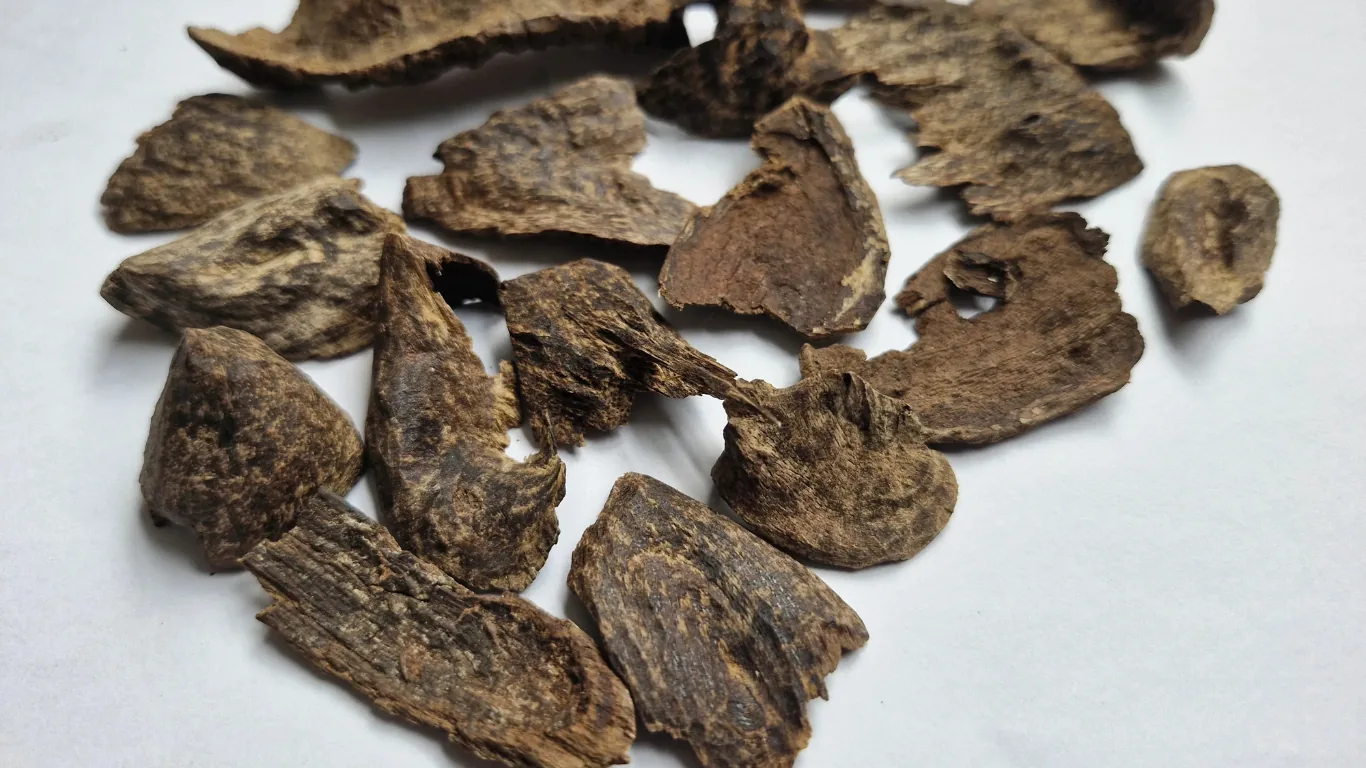
Visually, Kyara often defies conventional expectations of “sinking grade” agarwood. While extremely dense and resinous, its appearance can vary. Museum Grade Kyara typically displays a distinct waxy sheen, sometimes appearing almost metallic or iridescent under certain light. Its color can range from a deep, shimmering black (Kuro Kyara), to reddish-brown (Akita Kyara), greenish-brown (Midorin Kyara), or even yellowish (Ki Kyara). The resin isn’t always visibly layered in thick veins; instead, it tends to saturate the wood uniformly, giving the piece a consistent density and a smooth, almost polished feel. Unlike common agarwood, which can be hard and brittle, Kyara often feels softer, slightly pliable, and can sometimes be gently manipulated without splintering.
Tactile evaluation is crucial. Genuine Kyara will feel unusually heavy for its size, indicating profound resin saturation. When gently scraped or rubbed, it should produce a faint, oily residue and release an immediate, complex cold aroma. The texture is often described as smooth, dense, and slightly ‘waxy’ or ‘oily’ to the touch. This pliability and the presence of natural oils even at room temperature are key indicators, differentiating it from drier, harder high-grade agarwood.
However, the ultimate test lies in the olfactory experience. The “five-note” fragrance profile—sweet, sour, spicy, bitter, and salty—is the undisputed signature of Kyara. This profile is not simply a sequential unfolding of notes but a harmonious, interwoven symphony. When gently heated (never burned directly with an open flame, but warmed on a mica plate over a low-temperature heater, typically between 150-220°C), Kyara releases its complex bouquet. It starts with an initial burst of sweetness, quickly followed by a tangy sourness, a subtle hint of spice, a grounding bitterness, and finally, a unique saline note that cleanses the palate and lingers ethereally. The aroma should be incredibly long-lasting, evolving slowly and gracefully, never harsh or smoky. It should feel ‘clean’ and ‘bright’, even in its deeper notes, without any hint of artificiality or chemical undertones. This profound aromatic journey is what sets Museum Grade Kyara apart, making it an experience rather than just a scent.
| Feature | Museum Grade Kyara (Ky Nam) | High-Grade Sinking Agarwood (Grade A) |
|---|---|---|
| Origin | Specific regions (e.g., Khanh Hoa, Vietnam), rare old-growth trees. | Various regions, older mature trees. |
| Formation Time | Centuries (100+ years), highly specific fungal interaction. | Decades (30-80 years), common fungal infection. |
| Appearance | Often waxy, slightly pliable, subtle resin saturation; colors can be green, yellow, brown, black. | Hard, brittle, clearly defined dark resin veins; typically dark brown to black. |
| Density | Extremely dense, usually sinks immediately. Often feels heavier than it looks. | Very dense, usually sinks. |
| Texture | Smooth, slightly oily/waxy, can be gently scraped to reveal soft resin. | Hard, woody, sometimes flaky or splintery. |
| Aroma Profile (Heated) | Legendary “five-note” profile (sweet, sour, spicy, bitter, salty) in interwoven harmony. Incredibly complex, clean, evolving, and long-lasting. | Rich, woody, often sweet, balsamic, sometimes leathery or fruity. Lacks the Kyara’s specific complexity and ‘cleanliness’. |
| Olfactory Experience | Ethereal, profound, transformative, feels ‘bright’ and ‘vibrant’. | Deep, grounding, luxurious, but more linear. |
| Value & Rarity | Extremely rare, highest value, collectors’ item, almost priceless. | Rare, high value, luxurious aromatic material. |
A Symphony of Scents: The Ethereal Five-Note Profile of Kyara and Its Cultural Significance
The olfactory signature of Kyara is a complex tapestry woven with five distinct, yet harmoniously interwoven, notes: sweet, sour, spicy, bitter, and salty. This “Gomi” (five flavors/notes) profile is not merely a descriptive list but a sacred language for connoisseurs, a profound experience that unfolds with unparalleled grace and longevity. Each note contributes to a holistic aroma that transcends simple fragrance, touching upon spiritual and emotional realms.
The sweetness in Kyara is unlike any other. It is not cloying or saccharine but a refined, ethereal sweetness reminiscent of honey, ripe fruits, or blooming flowers under a warm sun. This initial impression is often what first captivates the senses, drawing one into its mystical embrace. Following this, a subtle yet distinct sourness emerges. This isn’t an unpleasant acidity but a tangy, bright note akin to a dried plum or a hint of citrus zest, which adds complexity and prevents the sweetness from becoming monotonous. It provides a delightful counterpoint, cleansing the palate of the nose, preparing it for the next revelation.
Next, a gentle spiciness makes its appearance. This is not the fiery heat of chili, but the delicate warmth of cinnamon, cloves, or a faint peppercorn note, adding a stimulating depth and a subtle invigorating quality to the profile. This spice often intertwines beautifully with the sweetness, creating layers of aromatic intrigue. Beneath these lighter notes, a profound bitterness anchors the fragrance. This is a noble bitterness, reminiscent of dark chocolate, coffee, or medicinal herbs, lending gravity, wisdom, and a grounding presence. It prevents the scent from being overly light, adding a serious, contemplative dimension that speaks of age and deep wisdom.
Finally, and perhaps most uniquely, Kyara reveals a subtle saltiness. This note is often described as reminiscent of ocean air, mineral-rich earth, or even the subtle saline taste of saliva, which oddly enough, cleanses the palate and prolongs the overall aromatic experience. This elusive salty note often lingers longest, leaving a clean, almost refreshing finish that invites further introspection. The true magic of Kyara is how these five notes do not simply appear in sequence but interact, interweave, and evolve over time, creating a dynamic, living fragrance that transforms with each inhalation.
Culturally, this five-note profile has been revered for millennia. In ancient Vietnam, Ky Nam was considered a treasure fit for royalty and high priests, used in sacred rituals, meditation, and as a potent healing agent. Its incense was believed to bridge the earthly and spiritual realms, facilitating enlightenment. In Japan, the art of Koh-do (the Way of Incense) elevates Kyara to its pinnacle, where practitioners learn to identify and appreciate each note, using its aroma for mindfulness and spiritual refinement. The pursuit of Kyara, and the appreciation of its complex scent, is therefore not just a luxurious indulgence but a profound connection to ancient traditions, a path to inner peace, and a testament to nature’s most exquisite gift.
The Collector’s Journey: Acquisition, Preservation, and the Future of Kyara
Embarking on the journey to acquire Museum Grade Kyara is a commitment to connoisseurship, patience, and diligent research. For the serious collector, this is not merely a transaction but an investment in a piece of natural history, a fragrant heirloom that will appreciate in value and significance over time. The rarity of genuine Kyara means that opportunities for acquisition are few, and the stakes are high, demanding meticulous attention to detail and unwavering trust in your source.
The first and most crucial step for any collector is to identify and establish a relationship with reputable dealers. In a market rife with counterfeits and mislabeled products, a dealer’s reputation, transparency, and depth of knowledge are invaluable. Look for suppliers who can provide clear provenance, detailed photographs, and are willing to engage in in-depth discussions about the specimen’s characteristics. At OudWood Vietnam, we pride ourselves on our multi-generational expertise, direct sourcing from the revered forests of Khanh Hoa, and strict adherence to ethical practices, including CITES certification for all our agarwood products. This ensures legality for international shipping and gives collectors peace of mind.
When evaluating a potential acquisition, don’t hesitate to ask for multiple forms of authentication. While the ultimate test remains the olfactory experience when gently heated, reputable dealers might offer lab analyses to confirm species, resin composition, and age. Learn to trust your own senses, too; spend time with the cold sniff, the tactile feel, and if possible, a gentle, low-heat test. Be wary of prices that seem too good to be true, as they almost certainly are. Genuine Museum Grade Kyara commands prices that reflect its extreme rarity and centuries of formation.
Once acquired, proper preservation is essential to maintain Kyara’s integrity and aromatic profile. Store your Kyara in an airtight container, away from direct sunlight, extreme temperature fluctuations, and high humidity. A cool, dark, stable environment is ideal. Many collectors use small, inert glass or wooden boxes, sometimes lined with silk, to protect their pieces. Avoid plastic, which can off-gas and affect the delicate aroma. Regular, gentle handling with clean hands can also help maintain its waxy sheen and prevent drying out.
The future of Kyara is intertwined with global conservation efforts. Wild Kyara is an increasingly endangered resource. While OudWood Vietnam is committed to ethical sourcing and CITES compliance, collectors also play a vital role by supporting reputable suppliers who adhere to sustainable practices and do not contribute to illegal harvesting. As old-growth forests diminish, the value of existing Museum Grade Kyara will only continue to rise, solidifying its status not just as a luxurious aromatic, but as a precious, irreplaceable artifact for generations to come. Your collection becomes a testament to natural beauty and a commitment to preserving cultural heritage.
Frequently Asked Questions About Museum Grade Kyara Agarwood
What makes Kyara different from other agarwood?
Kyara is a distinct category of agarwood, distinguished by its unique formation process (specific fungal infection, prolonged maturation over centuries), its characteristic “five-note” aroma profile (sweet, sour, spicy, bitter, salty), its often waxy/pliable texture, and its extremely high resin saturation that permeates the wood cells uniformly, rather than in distinct layers. It offers a much more complex, evolving, and ethereal aromatic experience compared to even the highest grades of regular agarwood.
How can I identify authentic Museum Grade Kyara?
Authentic Museum Grade Kyara can be identified through a multi-sensory evaluation: look for a waxy sheen, feel for a dense yet slightly pliable texture, and most importantly, experience its unique “five-note” aroma when gently heated (not burned). Reputable dealers will also provide clear provenance, possibly lab analysis, and have a deep understanding of its characteristics. Be extremely cautious of deals that seem too good to be true.
Is Kyara sustainable?
Wild-harvested Kyara, especially Museum Grade, is inherently not sustainable in the traditional sense due to its centuries-long formation process and the depletion of old-growth Aquilaria forests. However, ethical suppliers like OudWood Vietnam ensure that any Kyara offered is legally sourced, often from old finds, and is CITES certified to prevent illegal trade and support conservation efforts for the species.
What is the best way to experience Kyara?
The best way to experience Museum Grade Kyara is through gentle heating, not direct burning. Place a small piece on a specialized electric incense heater with a mica plate, typically set to a low temperature (150-220°C). This allows the delicate volatile compounds to release slowly and gracefully, unveiling the full spectrum of its complex aroma without harsh smoke.
Why is Kyara so expensive?
Kyara’s exorbitant price stems from its extreme rarity, its unpredictable and centuries-long natural formation process, the difficulty of harvesting it from remote forests, and its unparalleled aromatic complexity and spiritual significance. It is a finite, diminishing resource, considered a cultural artifact and a luxury investment.
Does OudWood Vietnam offer Kyara?
Yes, at OudWood Vietnam, we occasionally source and offer extremely rare pieces of Ky Nam (Vietnamese Kyara) in raw chip form for discerning collectors, directly from the venerated Aquilaria crassna trees of Khanh Hoa province. We also offer a range of other high-grade agarwood products, including incense sticks, cones, coils, backflow cones, raw chips, essential oil, and bracelets, all 100% pure and natural, free from synthetic chemicals.
What does “Museum Grade” truly mean in the context of Kyara?
“Museum Grade” for Kyara signifies the absolute pinnacle of quality, rarity, and historical significance. It refers to specimens that are centuries old, possess the ideal “five-note” aroma profile at its most intense and complex, exhibit perfect resin saturation and texture, and are considered cultural artifacts worthy of preservation in the finest collections or museums, representing the purest expression of natural agarwood.
The journey into the world of Museum Grade Kyara is one of discovery, appreciation, and deep respect for nature’s extraordinary gifts. At OudWood Vietnam, we are honored to share our expertise and our authentic, CITES-certified agarwood from Khanh Hoa province with you. Explore our full range of pure natural agarwood products and embark on your own aromatic adventure by visiting OudWoodVietnam.com.
🌿 Connoisseur Guide: Understand the botanical and resin differences between regular oud and imperial Kyara in our Kinam vs Oud vs Agarwood Definitive Breakdown.
📌 Kinam & Kyara Connoisseur Cluster:
- Pillar Analysis: Kinam vs Oud vs Agarwood: The Real Difference & Sinking Kyara Guide
- Comparison: Wild Kinam vs Cultivated Kinam (Resin Density & Olfactory Breakdown)
- Collector Trend: Why Japanese Sinking Kinam Bracelets Command $10,000 to $100,000+
- Masterpiece Product: Authentic Vietnam Sinking Kinam Beads Bracelet
- Kinam Vault: Explore Certified Vietnamese Kinam / Kyara Specimens

Oud Wood Agarwood Chips
Hoi An Oud Wood Agarwood Chips | Doi De A | Grade A++ | 20g
Oud Wood Agarwood Chips
Khanh Hoa Oud Wood Agarwood Chips | Chop Mu A | Grade A++ | 20g
Oud Wood Agarwood Chips
Natural Oud Wood Agarwood Chips | Mo | Grade A | 30g